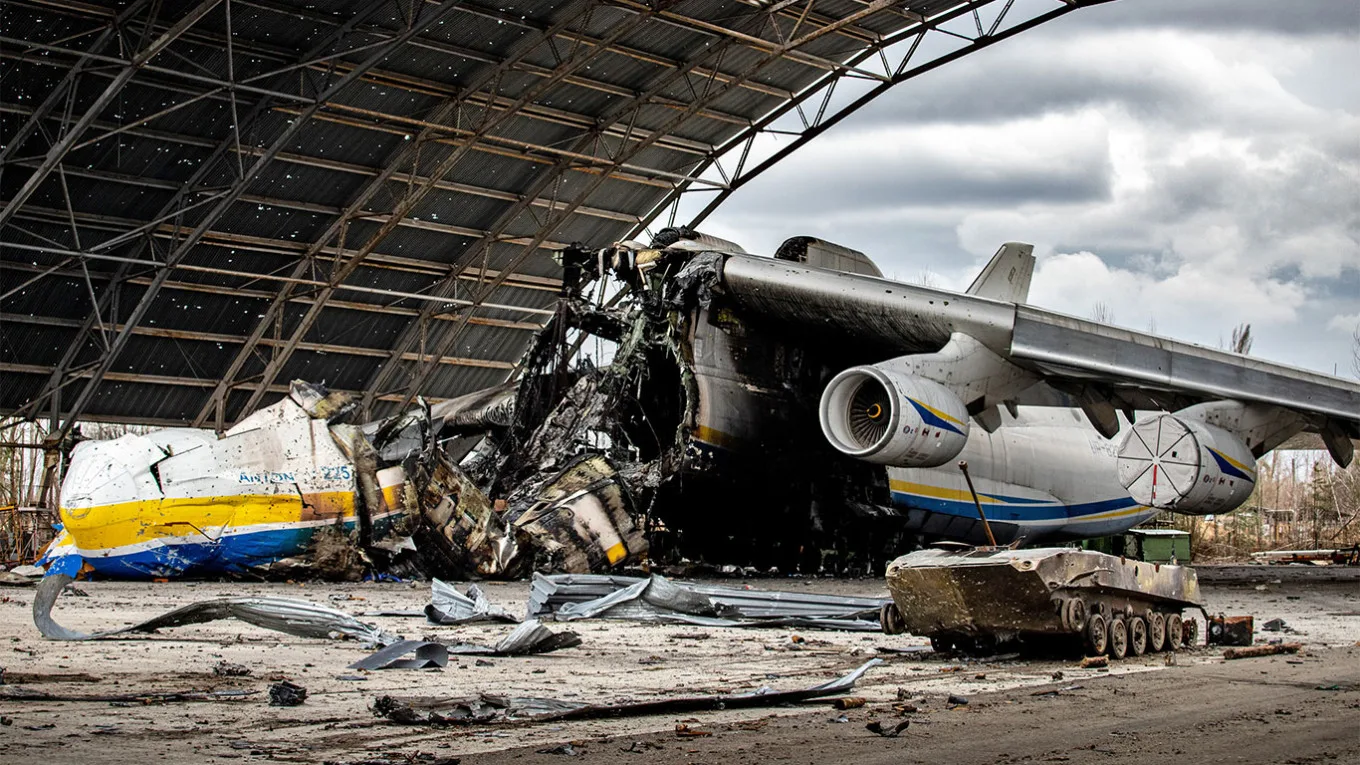
The world’s largest aircraft, the Antonov An-225 Mriya (“Dream” in Ukrainian), was destroyed during the early days of Russia’s full-scale invasion of Ukraine on February 24, 2022. Parked at Hostomel Airport (also known as Antonov Airport) near Kyiv for maintenance, the massive cargo plane was caught in a Russian airstrike and subsequent ground assault aimed at capturing the airfield. This symbolic loss—representing Ukrainian engineering pride and Soviet-era ambition—marked a devastating blow to Ukraine’s aviation heritage, with reconstruction costs estimated at over $3 billion.
The An-225: A Giant of the Skies
Dimensions: Wingspan of 88.4 meters (290 ft), length of 84 meters (276 ft), and maximum takeoff weight of 640 tons (1,410,958 lbs)—larger than any operational plane today.
History: Built in 1988 by the Antonov Design Bureau in Kyiv as a Soviet project to transport the Buran space shuttle (similar to NASA’s Boeing 747-modified Stratospheric Shuttle Carrier). Only one was completed; a second remains unfinished.
Role: Post-Cold War, it became a commercial freighter for Antonov Airlines, hauling oversized cargo like wind turbine blades, locomotives, and humanitarian aid. It set 250+ world records, including the heaviest single-piece cargo lift (189 tons).
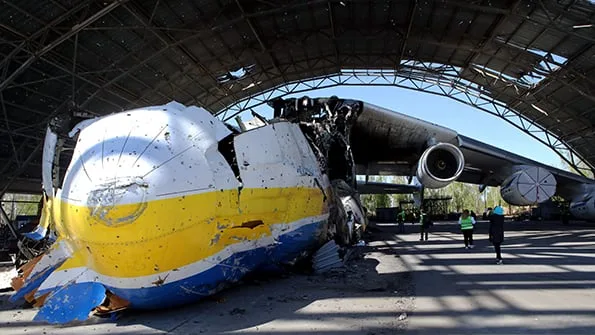
The Mriya was undergoing engine repairs and couldn’t evacuate despite orders, leaving it vulnerable in the open hangar.
The Attack: Battle of Antonov Airport
Context: Russian forces launched a rapid airborne assault on Hostomel to secure a foothold for advancing on Kyiv. Helicopters inserted paratroopers, but Ukrainian defenses fought back fiercely.
Destruction: Explosions and gunfire ignited fires at the hangar. Satellite imagery from NASA and Planet Labs confirmed the An-225’s fuselage collapsed, wings crumpled, and cockpit gutted. Other aircraft, including a Hungarian Cessna 152, were also destroyed or damaged.

Aftermath: Ukrainian officials, including Foreign Minister Dmytro Kuleba, mourned it as a “symbol of our strength.” Ukroboronprom vowed to rebuild at Russia’s expense, but as of 2025, efforts stall amid war priorities. The site remains a contested ruin.
Significance and Legacy
The An-225’s loss wasn’t just material—it was psychological warfare. Russia targeted a Ukrainian icon to demoralize, but it galvanized resistance: “Russia may have destroyed our Mriya, but they will never destroy our dream,” Kuleba tweeted. Aviation enthusiasts worldwide grieved, with tributes from NASA and Boeing. Reconstruction talks continue, but experts doubt a full revival without massive funding.
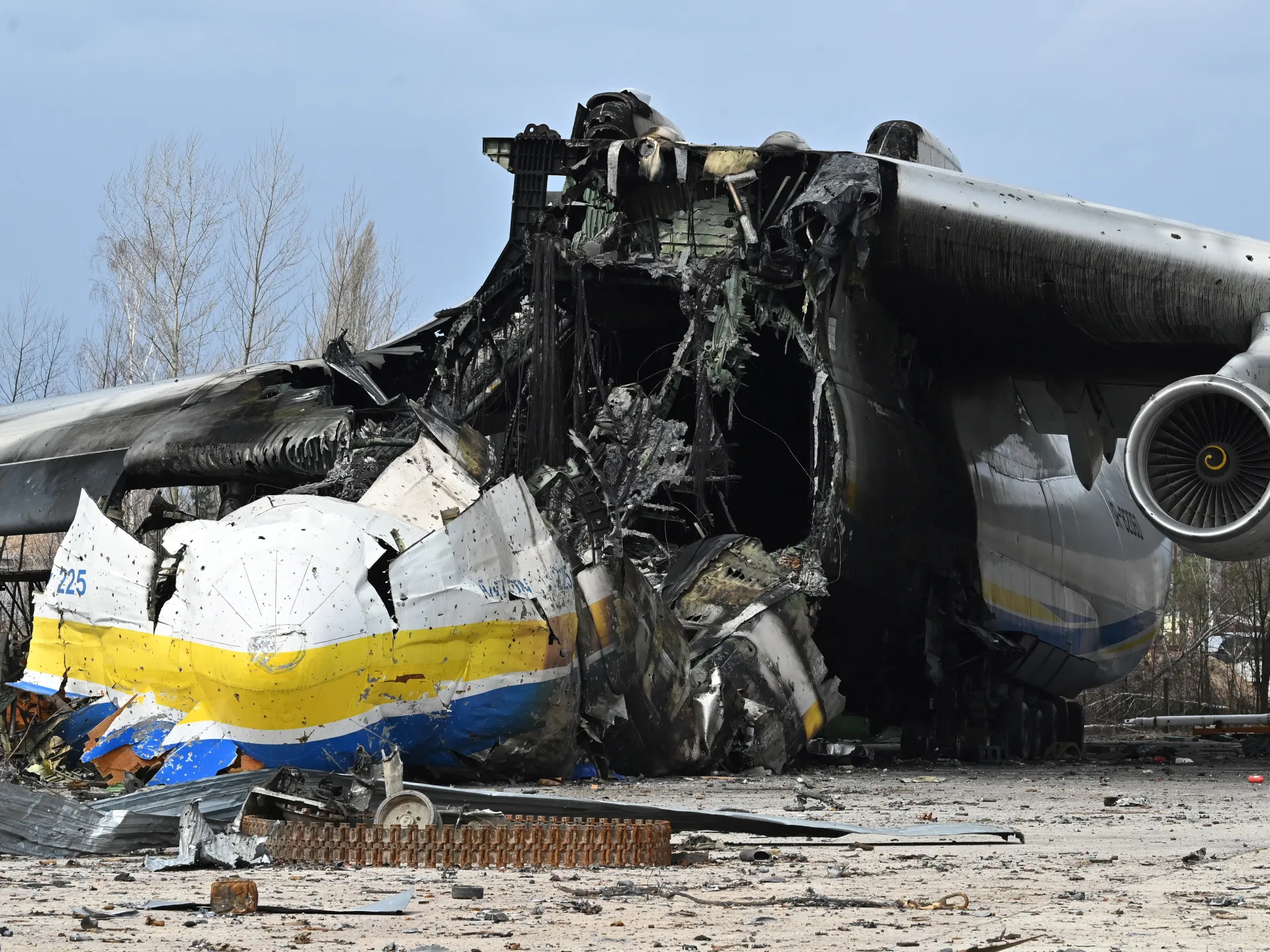
This event underscores the war’s toll on cultural heritage, echoing destroyed sites like Mariupol’s theater. The Mriya, once a Cold War behemoth turned global workhorse, now symbolizes Ukraine’s unyielding spirit.