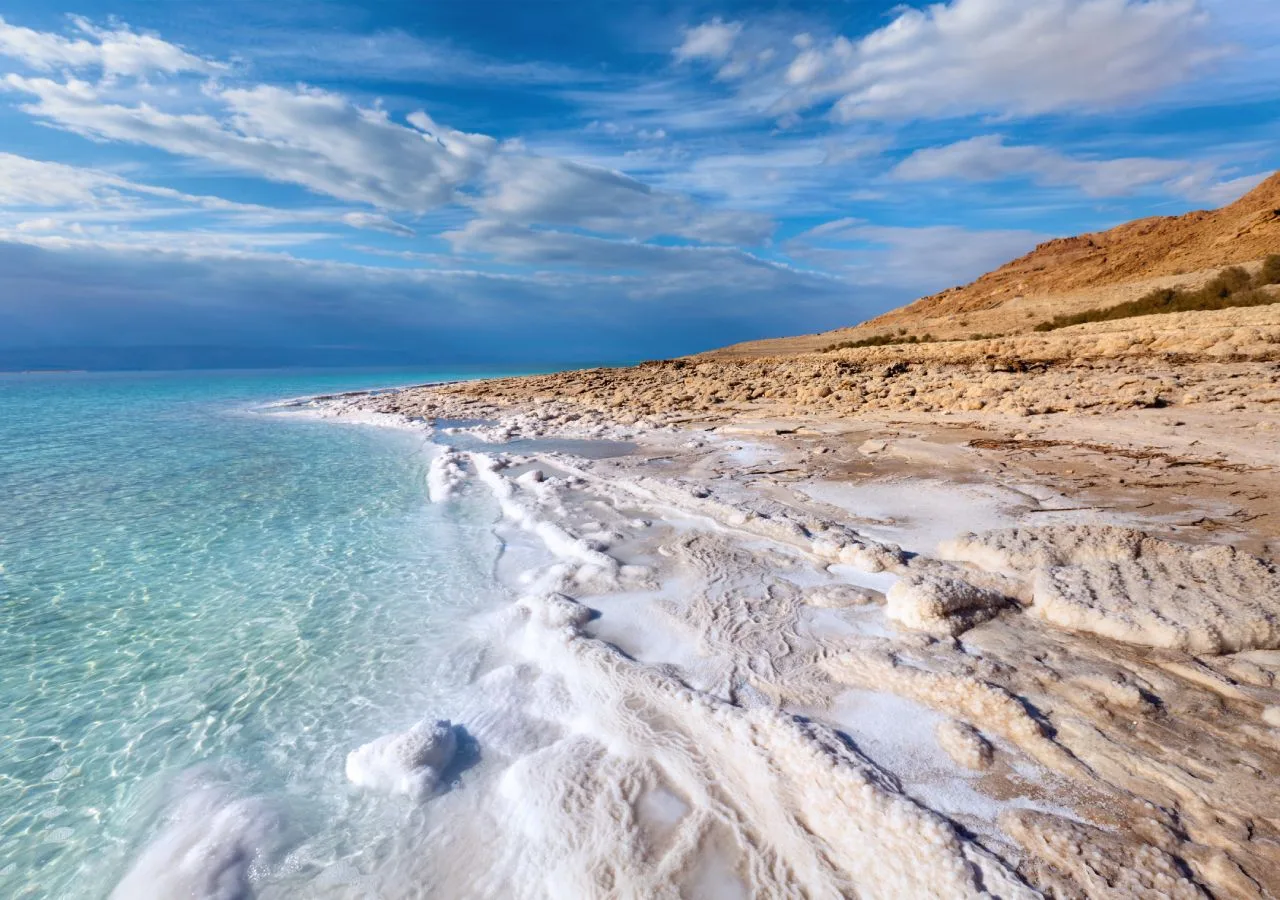
Imagine a vast, shimmering expanse of water so salty you float effortlessly on its surface — a natural marvel at the lowest point on Earth. This is the Dead Sea, nestled between Israel and Jordan. Yet its iconic status is now overshadowed by a dramatic, alarming transformation: the Dead Sea is disappearing.
In 1930, it covered 1,050 km² (410 sq mi).
Today, it spans only 605 km² (234 sq mi) — a nearly 50 % loss in surface area in less than a century.
This is not a slow natural process. It is a man-made environmental catastrophe unfolding in real time.
The Cause: Human Intervention
The Dead Sea has no outlet — it loses water only through evaporation. Historically, this was balanced by fresh water flowing in from its main tributary, the Jordan River. But over the past 70 years:
- Israel, Jordan, and Syria have diverted more than 95 % of the Jordan River’s flow for agriculture, drinking water, and industry.
- Rising regional temperatures have increased evaporation rates.
- Mineral extraction companies pump water from the southern basin into massive evaporation ponds to harvest potash, magnesium, and bromine.
The result: the Dead Sea’s water level drops 1–1.5 meters (3–5 feet) every year.

The Dramatic Split
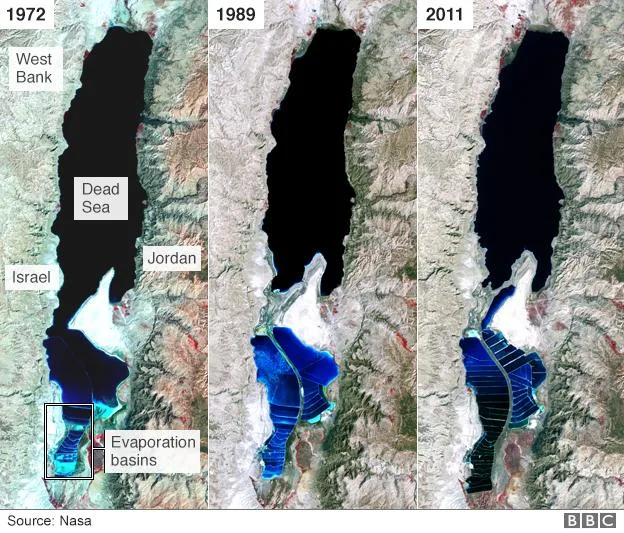
Around 1979, the shrinking lake reached a tipping point: it split in two.
- The northern basin (deeper, ~400 m) still receives minimal inflow but continues to shrink.
- The southern basin (shallower) has almost completely dried up, replaced by industrial evaporation ponds owned by companies like Israel’s ICL and Jordan’s APC.
Satellite imagery shows this stark division — once a single shimmering lake, now a fractured landscape of blue water and white salt pans.
Sinkholes: The Ground Is Collapsing
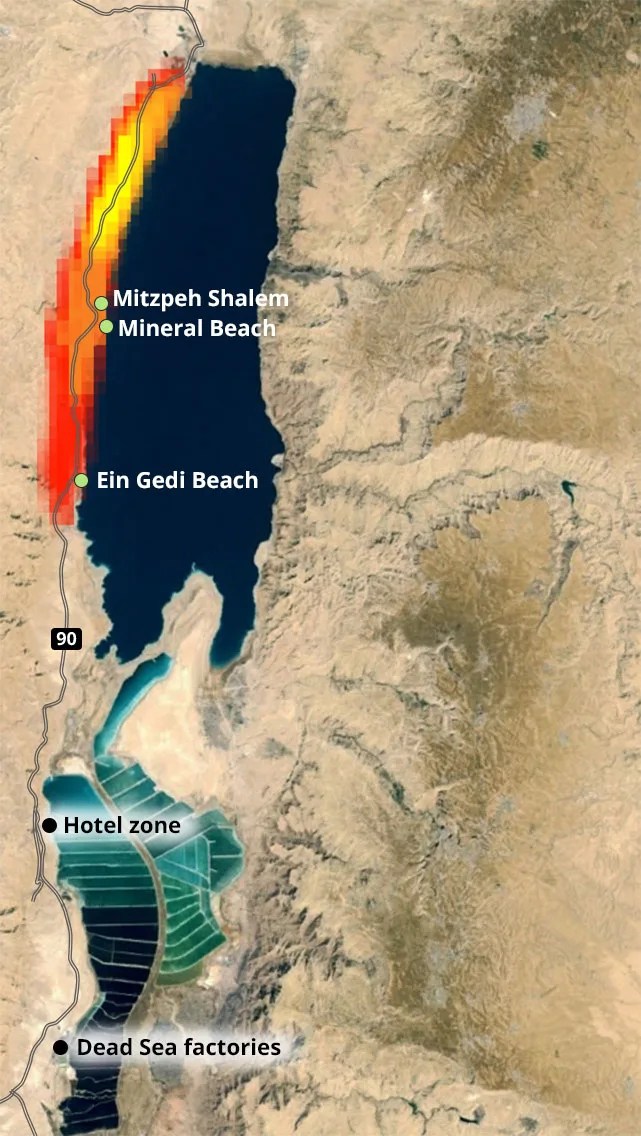
As the water recedes, underground salt layers dissolve, creating voids that collapse into thousands of sinkholes along the shores. Over 7,000 sinkholes have appeared since the 1990s, some 30 meters deep, swallowing roads, buildings, and beaches. Entire resorts have been abandoned. The western shore alone loses 1 km of land per decade.
A Global Wake-Up Call
The Dead Sea is a UNESCO World Heritage candidate and one of the world’s most unique ecosystems — home to extremophile microbes, therapeutic minerals, and biblical history. Its decline is a visible warning of what happens when we over-exploit shared water resources.
Efforts to save it include:
- The stalled Red Sea–Dead Sea Conveyance project (a pipeline to pump seawater from the Red Sea).
- Regional water-sharing agreements (slowly emerging).
- Calls to reduce industrial extraction.
But time is running out.
A Mirror for the Future
The Dead Sea is not just shrinking — it is a mirror.
It shows what happens when human demand outpaces nature’s ability to replenish.
Like the Aral Sea’s tragic disappearance or the Colorado River’s struggle, the Dead Sea’s fate is a global cautionary tale: some wonders, once lost, cannot be brought back.
Yet its beauty endures — for now — inviting us to act before the lowest place on Earth becomes a memory.