Have you ever stopped to think about where the letters you’re reading right now actually came from?
That simple A at the start of this sentence? It began life as a picture of an ox head drawn in ancient Egypt more than 4,000 years ago. Every single letter in the modern Latin alphabet (the one used for English, Spanish, French, German, and dozens of other languages) has a surprisingly long and interconnected story — one that stretches back over 7,000 years through multiple civilizations.
Here’s a stunning visual overview of that entire evolution in one chart (popular versions shared widely online, including detailed ones inspired by creators like Rich Ameninhat):
Here are some of the clearest and most beautiful representations of the alphabet’s evolution I’ve found — they show the gradual transformation from pictographs to the sleek letters we know today.
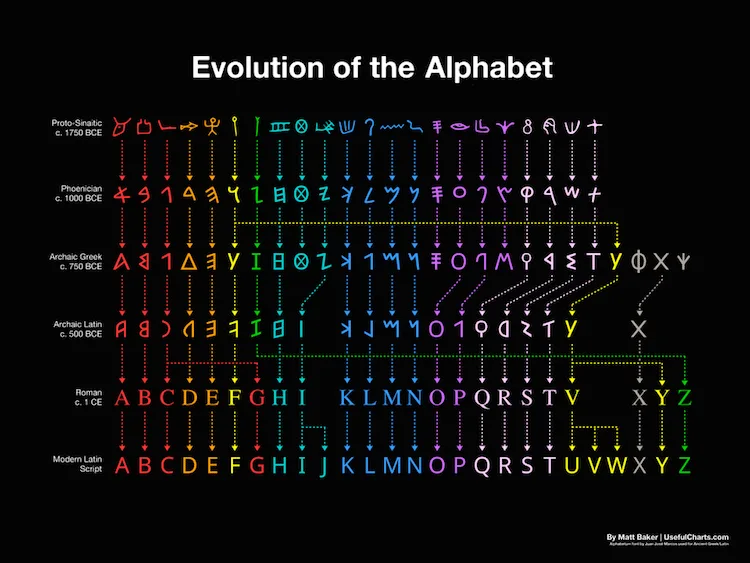
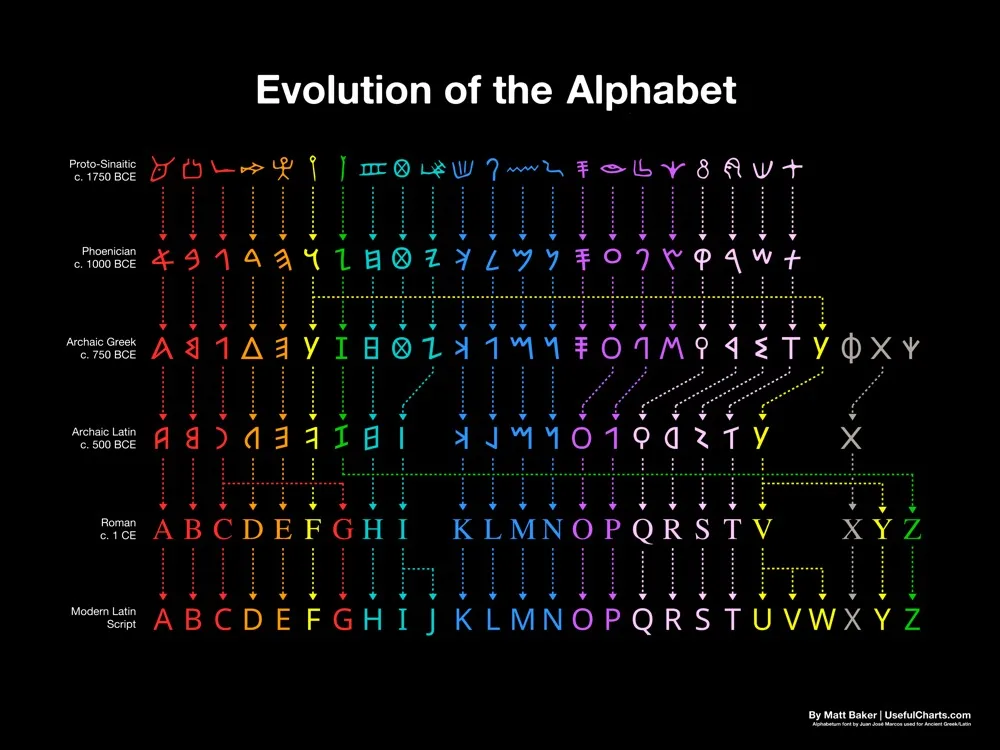
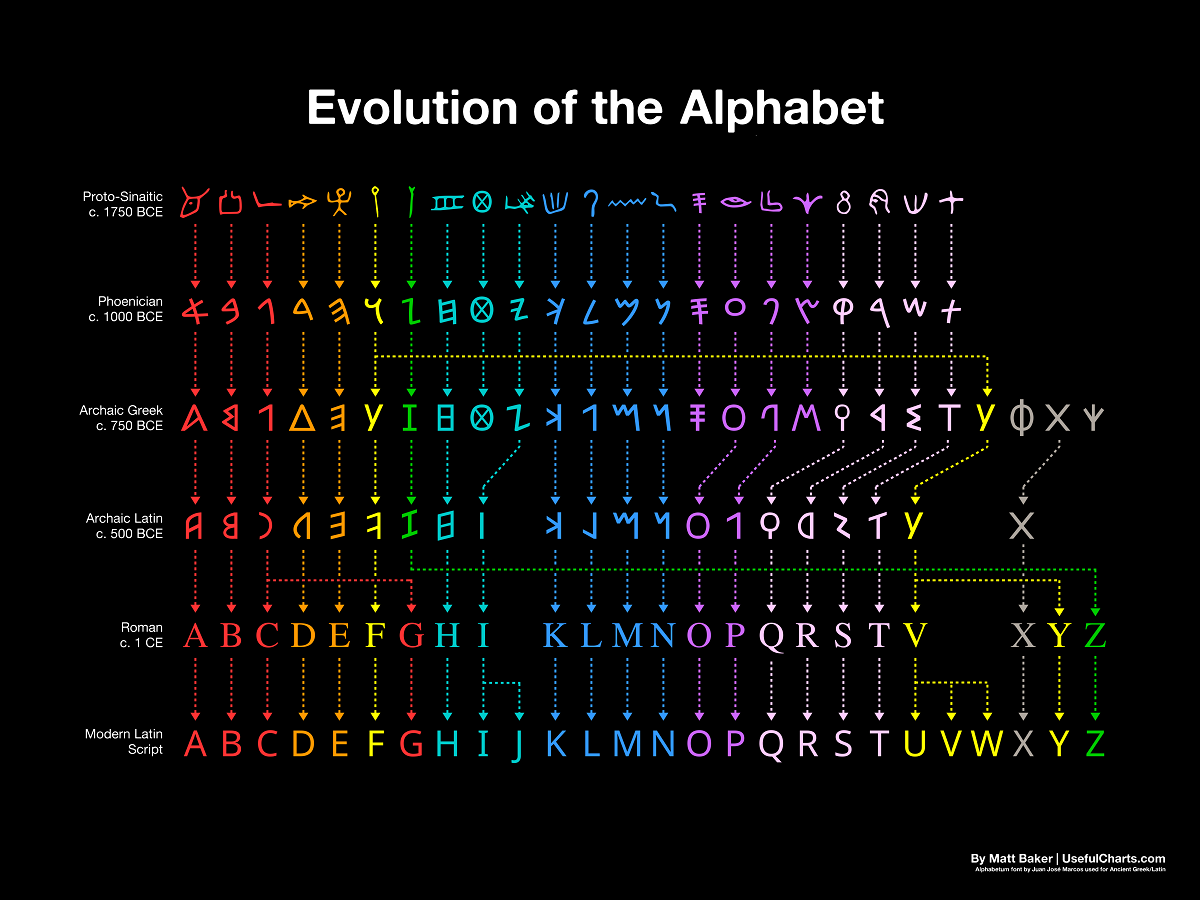
These colorful flowcharts trace each letter step-by-step across major writing systems. Let’s break down the amazing story behind them.
Stage 1: Egyptian Hieroglyphs – Pictures That Meant Words (c. 3200 BCE onward)
Ancient Egyptians didn’t have an alphabet in the modern sense. Their writing system used hieroglyphs — detailed pictures that could represent whole ideas, words, or even individual sounds.
Some of these single-sound symbols (especially the ones for consonants) would later inspire the first true alphabet.
Stage 2: The Birth of the Alphabet – Proto-Sinaitic (c. 1850–1500 BCE)
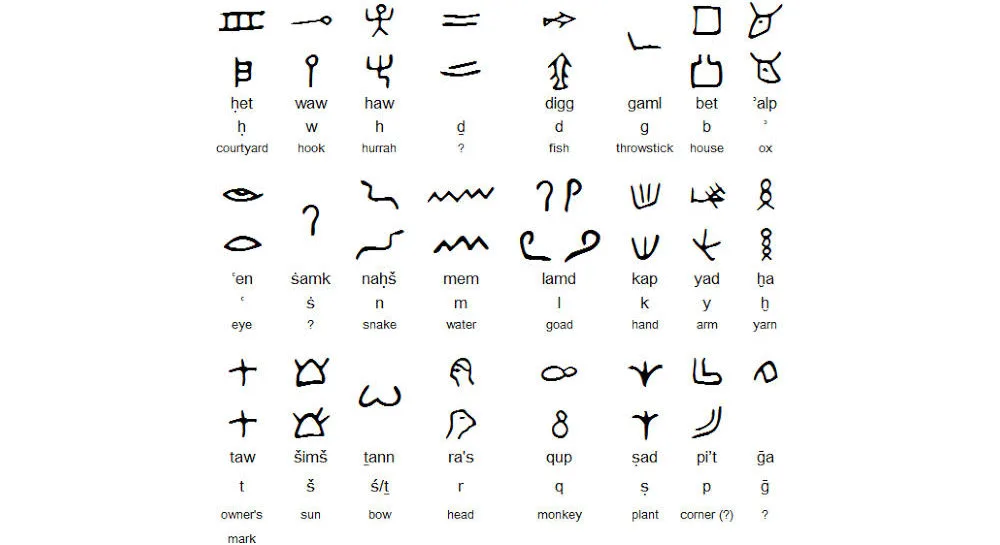
Around 4,000 years ago, Semitic-speaking workers in the turquoise mines of the Sinai Peninsula had a revolutionary idea.
They took familiar Egyptian hieroglyphs and repurposed them using a clever trick called the acrophonic principle: take the first sound of the word the picture represents in their own language, and use that symbol just for the sound.
Example: The Egyptian house symbol (pronounced something like “pr”) became the symbol for /b/ because the Semitic word for “house” was bayt (starting with b).
This simple innovation created the world’s first alphabet — a system of just a couple dozen signs representing consonants.
Here’s what some of the earliest Proto-Sinaitic inscriptions actually looked like on stone:

Stage 3: Phoenician – The Alphabet That Conquered the World (c. 1200–1000 BCE)
The Phoenicians (master traders from the coast of modern-day Lebanon) took this early system and perfected it into a clean, efficient 22-letter abjad (consonants only).
Their alphabet spread everywhere they sailed — to Greece, Italy, North Africa, and the Near East.
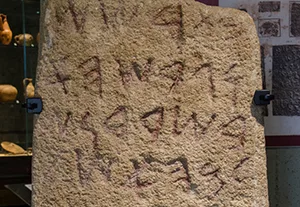
A real Phoenician inscription carved in stone (notice how angular and elegant the letters already look):
Stage 4: Greek – Vowels Are Born! (c. 800 BCE)
The Greeks borrowed the Phoenician letters but made one massive improvement: they added symbols for vowels.
They also flipped the direction of writing to left-to-right (and rotated some letters accordingly).
Suddenly writing became much easier and more precise — the foundation of Western literature was laid.
Stage 5: Latin – Our Modern ABCs Are Born (c. 700 BCE onward)
Through the Etruscans and early Romans, the Greek alphabet evolved into the Latin script we still use today.
Over centuries, small changes happened: new letters were added (like J, U, and W much later), shapes were standardized, and we got both uppercase and lowercase forms.
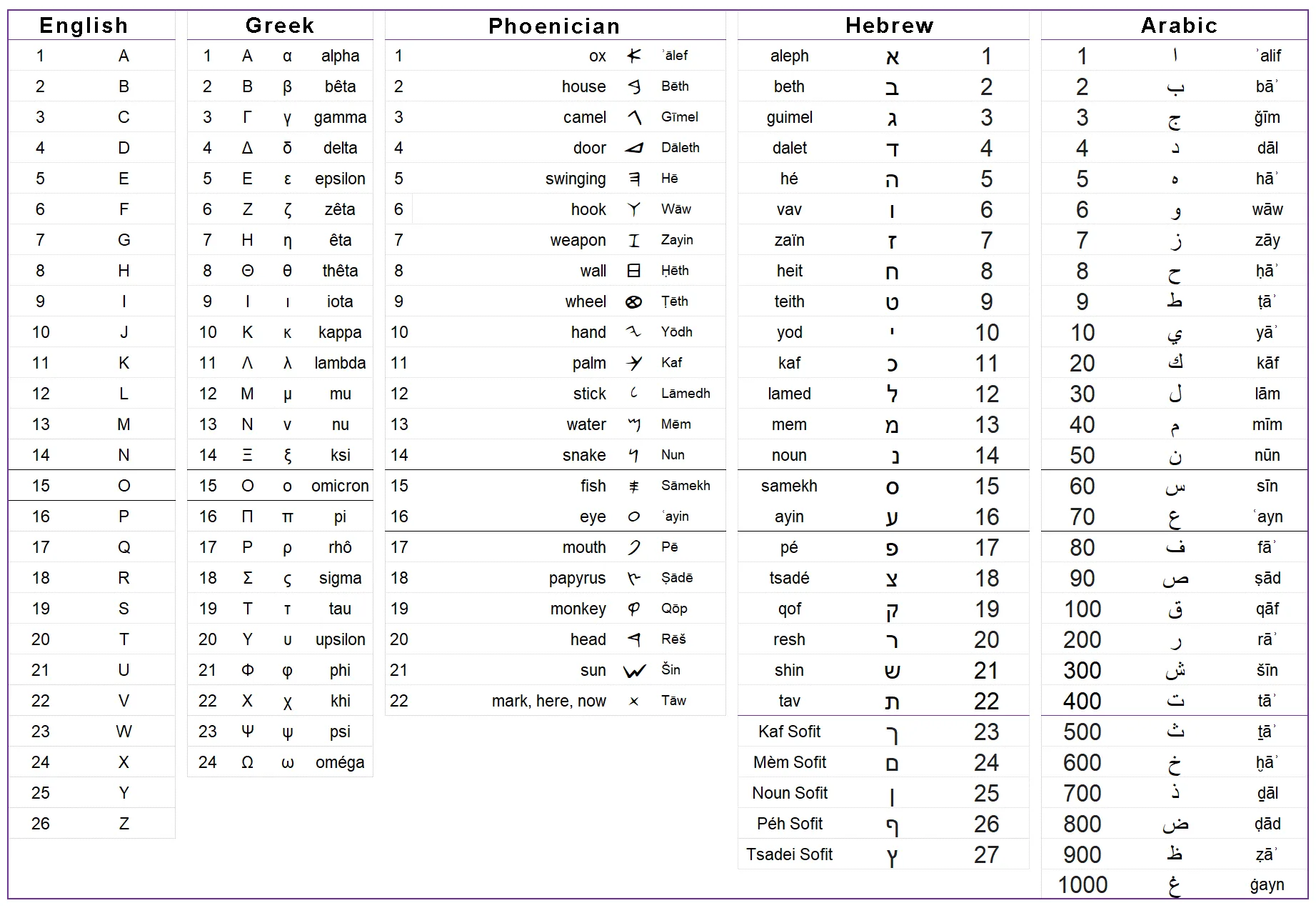
Here’s a side-by-side comparison showing how closely related many modern scripts still are:
A Classic Example: The Journey of the Letter “A”
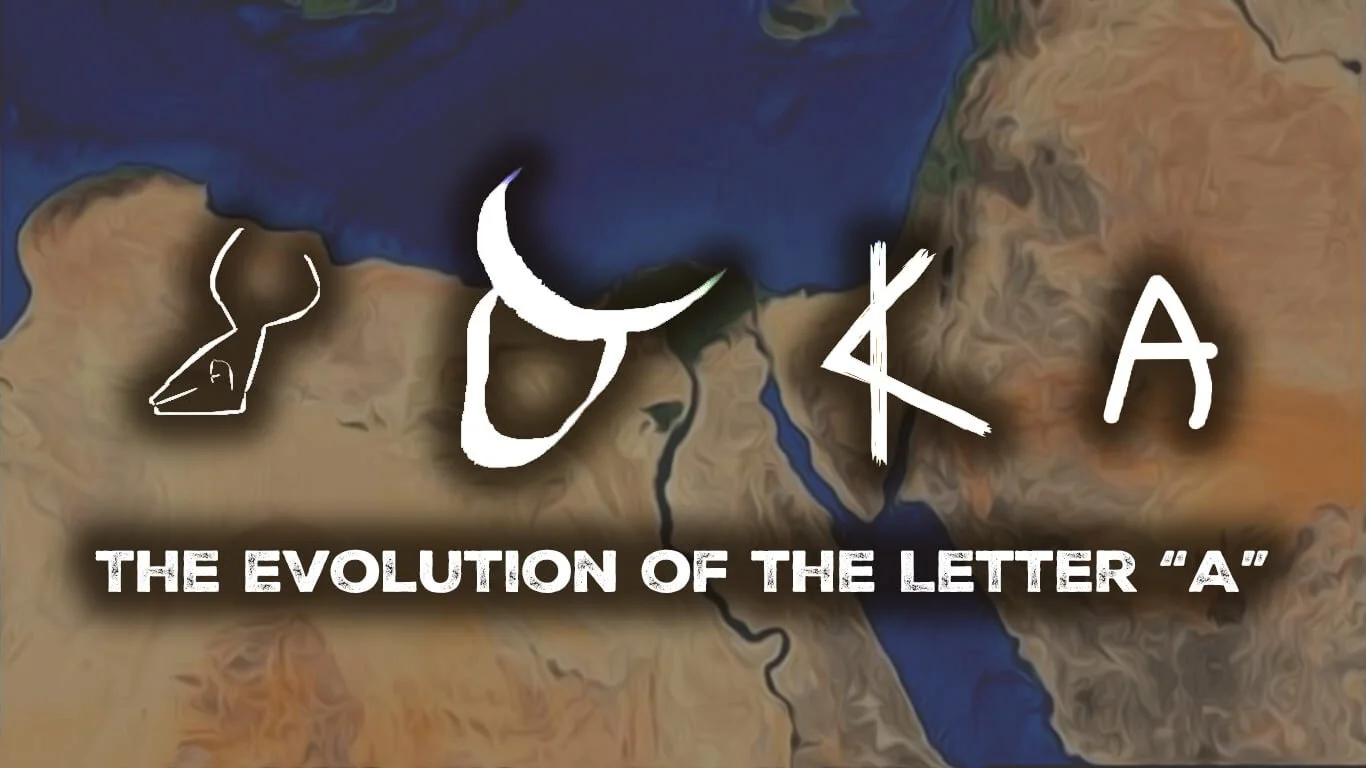
Perhaps the most famous transformation is the letter A:
- Started as an ox head (ʾālep in Semitic = “ox/leader”) → upside-down ox head with horns
- Became a sideways A in Phoenician
- Rotated upright in Greek → Α
- Became the familiar A / a in Latin
Here’s a visual timeline just for “A”:
Why This Matters Today
Every time you type a message, sign your name, or read a book, you’re using a technology that has been refined across thousands of years and countless cultures — Egyptians, Canaanites, Phoenicians, Greeks, Etruscans, Romans, and more.
Our alphabet isn’t just letters. It’s a living bridge connecting us to the ancient world.
Next time you write the letter A, remember: you’re drawing (in super-simplified form) the same basic shape that once represented the head of an ox — the leader of the herd — in the minds of people who lived four millennia ago.
Pretty mind-blowing, right?
What’s your favorite letter story? Or which ancient script fascinates you the most? Drop a comment below — I’d love to hear!
(Images sourced from various educational and historical resources, including Visual Capitalist, Open Culture, UsefulCharts, and archaeological archives.)