According to Plato, what he called the empire of Atlantis was composed of three basic parts. As explained in the book Atlantis 2021 – Lost continent discovered, these three parts were: A large island, which from the latest surveys by the Japanese satellite PALSAR appears to be an area of Morocco that several millennia ago was almost completely surrounded by the sea and the mega-river Tamanrasset, making it a” de facto” huge island.
A continental zone, which was in front of the Island, and which should therefore be present-day Spain. (3) Other minor islands, which from the Big Island allowed to reach the Continent. In practice, they were some islands that allowed to reach Spain from the North of Morocco. We call those islands today “the Canary Islands. But examinations carried out below sea level show that, before the Last Deglaciation, when the sea was about 125 metres lower, between 14,000 and 7,000 years ago, many other archipelagos lay between North Africa and Spain.
These islands are really important in the search for the ‘historical Atlantis’, because it is possible that the only ‘direct descendants’ of the Atlanteans were found on these islands. How is this possible? Lanzarotto Malocello was an Italian explorer. He is the European discoverer of the Canary Islands, which lie opposite Morocco in the Atlantic Ocean. In fact, in 1312 AD. Lanzarotto Malocello landed on an island that was later named “Lanzarote”.
As explained in the book Atlantis 2021 – Lost continent discovered, the indigenous population that inhabited the Canary Islands before the arrival of the Europeans is known as the Guanches, now totally extinct. The term Guanches comes from the native term Guanchinet, which literally means inhabitant of Tenerife. In fact, the term is made up of Guan (which means person” or “inhabitant in the local language), and Chinet (the original name of the island that we call Tenerife). A DNA analysis carried out on some of the Guanches’ remains by researchers suggests that the humans to whom the remains belonged arrived on the island at least 6,000 years ago.
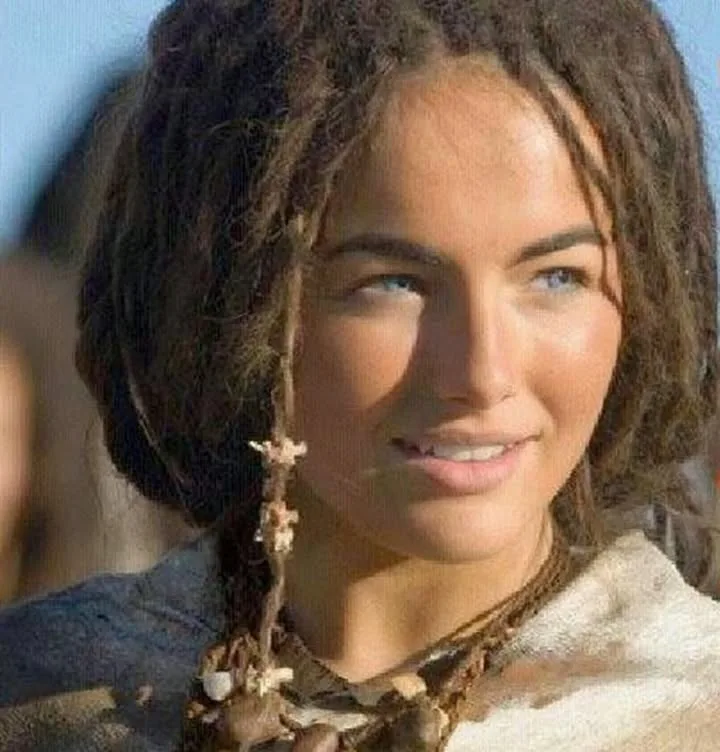
What kind of population would you expect to find off some islands near Africa? We would all expect to find people with a dark skin, black hair, and dark eyes. Also, living on an archipelago, we would expect to find experienced sailors, people born to sail. But to the surprise of the Spaniards, the Guanches were nothing of the sort. They were tall, robust, extremely beautiful people, with white skin, blue or grey eyes, and blond or reddish hair. They looked much more like Norwegians or Vikings and had absolutely nothing in common with any African or Spanish population. Furthermore, and this is really incredible, the Guanches had a bad relationship with the sea: they did not know how to build even the simplest of boats, and they were absolutely terrible at navigation. We could say that they were almost terrified of the sea. So how did they end up on those islands, if not by sailing? How is it possible that a population with Nordic features ended up in the vicinity of Africa without remembering how this happened?
But the mysteries of the Guanches do not end there. When the Spaniards arrived in the Canary Islands, the Guanches did not have a writing system. It would seem that they had not yet invented one. But wandering around the island, several writings were discovered in an unknown language, similar to that of the Berbers, who lived in the area of North Africa described by Plato as Atlantis. How is it possible for a people to have forgotten their own writing? What national ‘trauma’ affected them so that they ‘regressed’ to the status of ‘Men of Stone Age’?
The mystery of the Guanches goes much further. As explained in the book Atlantis 2021 – The Rediscovered Continent, when the Spaniards found them, the Guanches were unable to build dwellings. They lived in natural caves or makeshift huts, like real Stone Age people. Yet over time, at least six pyramids have been found on these islands (Pyramids of Güímar, in the island of Lanzarote)! And not just any pyramids. Some of the pyramids in the Canary Islands were built with such precision that on any given day of the year they align with the sun not once, but twice in the course of a single sunset. A true masterpiece of engineers and mathematicians. But what was it that so affected the Guanches that they forgot their architectural and mathematical skills, forcing them to live in caves?
The Guanches lived almost like ‘savages’ on the Canary Islands. Yet, they had an elaborate system of government. Although Tenerife is a rather small island and seemed to be living almost in the Stone Age in 1312 AD, according to many, the Guanches’ system of government was ‘too developed’ for a small place like their island, where any kind of culture seemed to be absent. Tenerife was divided into 10 districts, and was ruled by 10 kings, as Plato says Atlantis was ruled. One of them was the ‘main’ king, while 9 others collaborated with him in the kingdom. Plato says exactly the same thing for Atlantis. The similarity between the ‘ten kings’ of Tenerife and the ‘ten kings’ of Atlantis is remarkable. Is this just another ‘coincidence’?
This is an indication that the Canary Islands may once have been linked to a much larger political entity, from which they broke away for reasons that are unknown today and retained its system of government. From which ‘larger reality’ did the Guanches detach themselves administratively? What Plato called Atlantis?
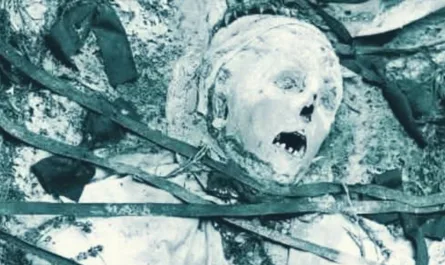
Another mystery of the Guanches concerns the way they treated the dead. Considering that the Guanches at the time of the Spaniards were almost a stone people, it is impressive to see that on the island of Tenerife, some corpses were mummified. But there is no consensus among scholars on this. Some think that the process of drying the corpses was largely due to environmental circumstances, and not to the technical skill of the doctors. Others think that the mummification of the corpses among the Guanches was intentional. But mummification is a process that, however simplified, requires an advanced culture behind it, a culture that does not seem to exist in the ancient Canary Islands. But this culture seems to be totally absent in the Canary Islands of Spanish times.
The Roman historian Pliny the Elder, quoting the king of Mauritania, Juba II, wrote about an expedition to the Canary Islands around 50 BC. According to him, the explorers found only the ruins of large buildings, but the places appeared uninhabited. Which large buildings was Juba II referring to? Where are they now? This is an unanswered question.
We can read about the Guanches in few books, and few documentary talk about them. Many people have never heard of them, and there is a reason for this. The Guanches are in fact an unsolved mystery to this day. There are no valid theories to explain their existence, their difference from present-day Africans, and above all to explain why they forgot the ability to navigate, to write and to build remarkable buildings. Everything indicates that they came from North Africa, from the area that Plato called Atlantis. But to admit this would be to ‘detonate an atomic bomb’ on our past, which would have to be completely rewritten.
This topic is explained in the following book:
Atlantis 2021 – Lost continent discovered
Author: Carlos A. Bisceglia