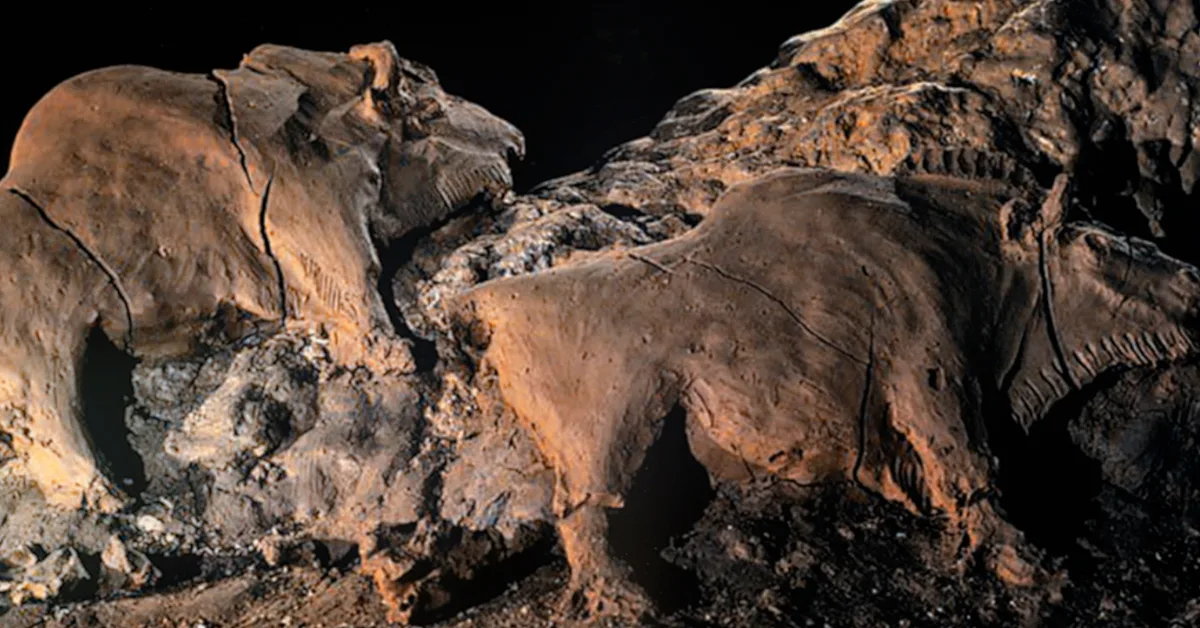
Deep in a remote cave in the foothills of the French Pyrenees lies one of the most remarkable treasures of prehistoric humanity: two life-like bison sculpted from clay, frozen in time for over 14,000 years.
These aren’t simple carvings on a wall. They’re three-dimensional sculptures, modeled by hand during the Magdalenian period of the Upper Paleolithic (roughly 17,000–12,000 years ago). Created when much of Europe was still gripped by the last Ice Age, they stand as powerful evidence of the artistic sophistication and deep connection our ancestors had with the natural world.
The Discovery That Changed Everything
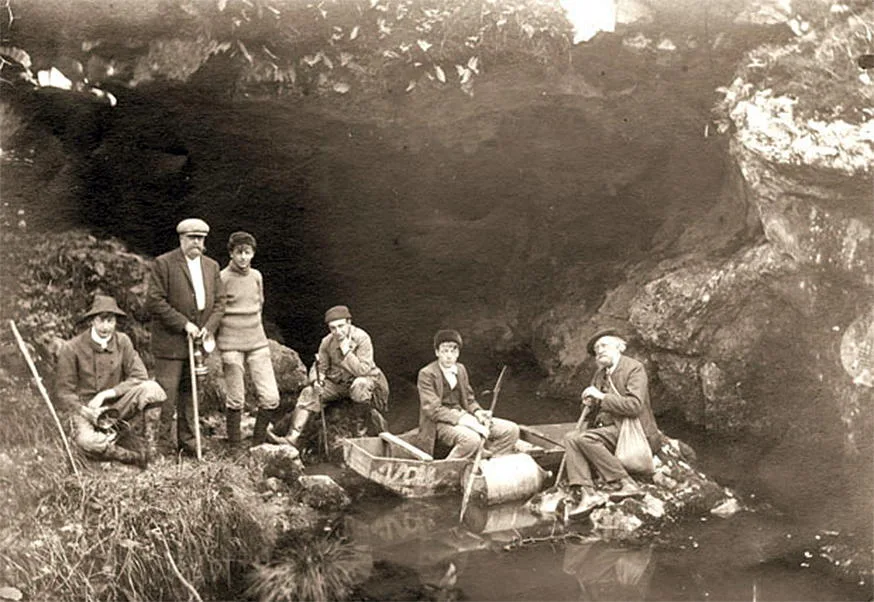
In 1912, three teenage brothers—Max, Louis, and Jacques Bégouën—along with a friend, explored the resurgence of the Volp River near their family estate in Montesquieu-Avantès, Ariège, France. Paddling into the cave on a makeshift raft, they stumbled upon a vast underground network that would later be divided into three connected sites: Tuc d’Audoubert, Trois-Frères, and Enlène.
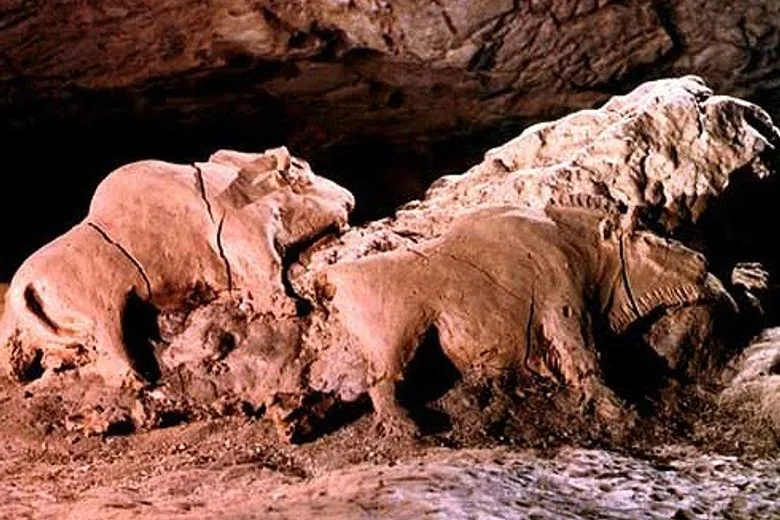
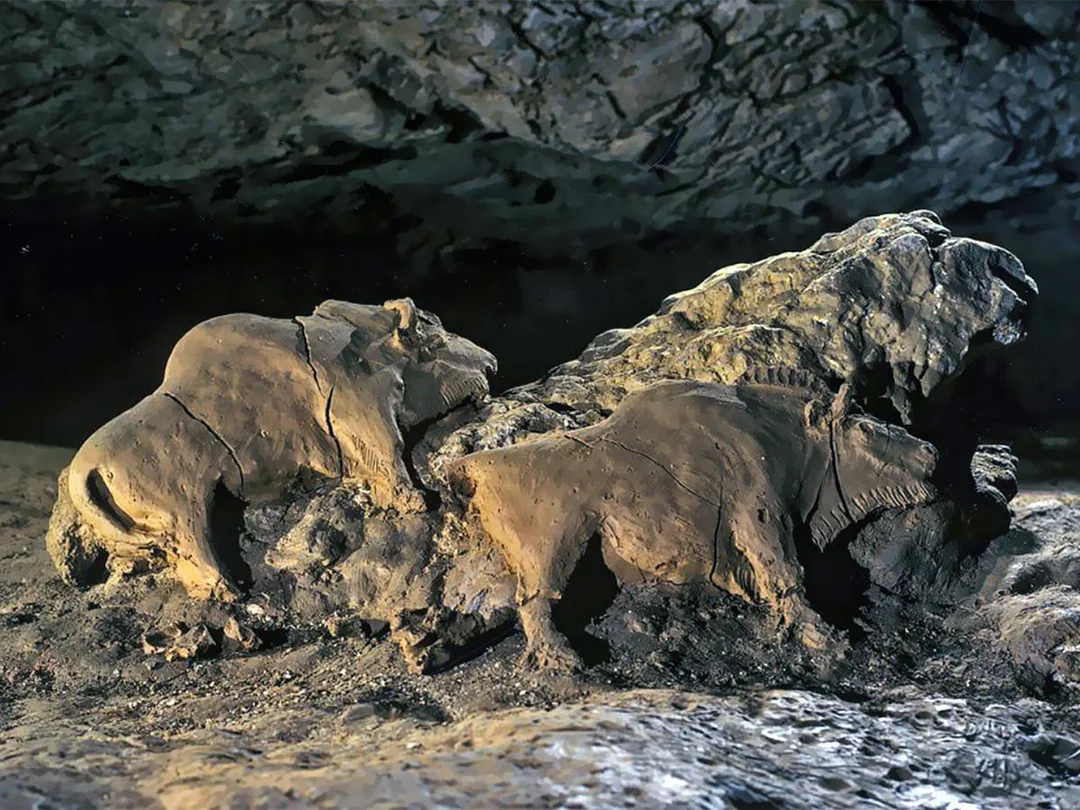
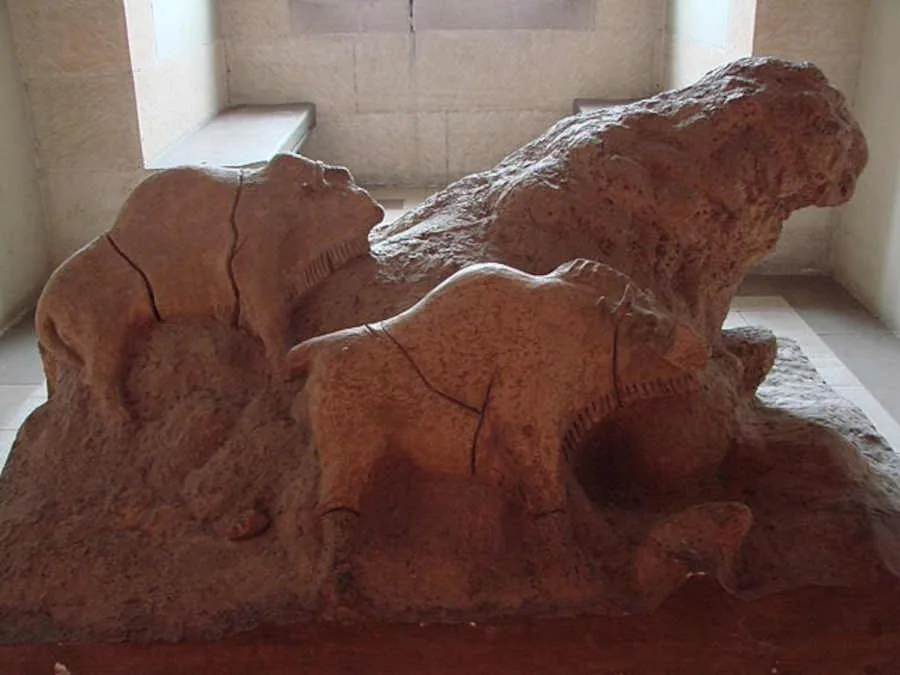
What they found inside was extraordinary. After clearing blocked passages, the boys reached a small, hard-to-access chamber known today as the Salle des Bisons (“Hall of the Bisons”). There, resting on a natural rock ledge, were two large clay figures: a bull bison positioned behind a cow, possibly in a mating or following scene.
The sculptures measure about 60–63 cm long and were crafted using clay sourced directly from the cave walls. Artists shaped the bodies with their fingers (fingerprints are still visible today), while finer details on the heads, manes, and legs were carved or incised with stone tools.
Why These Bisons Are So Special
Most Paleolithic art consists of paintings or engravings on cave walls (think Lascaux or Chauvet). True freestanding or relief sculptures in clay are extremely rare. The Tuc d’Audoubert bisons are among the finest and best-preserved examples anywhere in the world.
The larger bull and the cow show remarkable anatomical accuracy—the muscular humps, powerful legs, and expressive heads capture the essence of living bison that roamed the Ice Age landscape. The cow’s tail (now broken) was originally raised, adding to the dynamic feel of the scene.
These figures weren’t made for casual viewing. The chamber is difficult to reach even today, suggesting the sculptures held deep symbolic or ritual significance. Some researchers interpret the scene as related to fertility, hunting magic, or shamanic practices. Bison were vital to Magdalenian people as a source of food, hides, and tools, so depicting them with such care likely carried profound meaning.
The Bigger Picture: The Volp River Cave System
Tuc d’Audoubert is part of a larger complex formed by the underground Volp River. The caves contain multiple levels, with the lowest carrying the river and upper galleries featuring engravings, paintings, and abstract symbols (including many claviform or “club-shaped” signs).
Nearby Trois-Frères cave is famous for its “Sorcerer” figure—a mysterious half-human, half-animal engraving—while Enlène has yielded thousands of engraved bones and plaquettes. Together, these sites offer one of the richest windows into Magdalenian life and spirituality.
Preservation and Legacy
The stable, cool, and humid environment of the cave helped preserve these delicate clay works for millennia. Over time, they have dried and developed some cracks, but they remain astonishingly intact.
Today, the original sculptures are protected and not open to general public visits to prevent damage. High-quality facsimiles (replicas) allow people to appreciate them in museums, such as the Musée d’Archéologie Nationale in Saint-Germain-en-Laye.
What Can We Learn from This Ancient Art?
The bison of Tuc d’Audoubert remind us that creativity and symbolic thinking are not modern inventions. Fifteen thousand years ago, people were already masterful observers of nature, capable of translating living animals into powerful three-dimensional forms using only their hands, simple tools, and local materials.
Whether created for ritual, storytelling, or pure artistic expression, these sculptures speak across the ages. They show a profound respect for the animals that sustained life during harsh times—and a human urge to create beauty that still resonates today.
If you’re fascinated by prehistoric art, the caves of southern France and northern Spain (including Lascaux, Altamira, and Chauvet) offer an unforgettable journey into our shared ancestral past.
Have you seen these sculptures in person (or their replicas)? Or is there another piece of Ice Age art that captivates you? Let me know in the comments!