For 29 years after World War II ended, one Japanese soldier refused to surrender, convinced the war was still raging. Second Lieutenant Hiroo Onoda, stationed on the remote Philippine island of Lubang, continued guerrilla operations until 1974 — emerging from the jungle only when his former commanding officer, now a civilian bookseller, was flown in to personally relieve him of duty. His extraordinary story is not one of madness, but of absolute loyalty pushed to its most extreme limit — a man who followed orders so completely that he outlasted empires, governments, and even the Japan he once knew.
The Mission That Never Ended
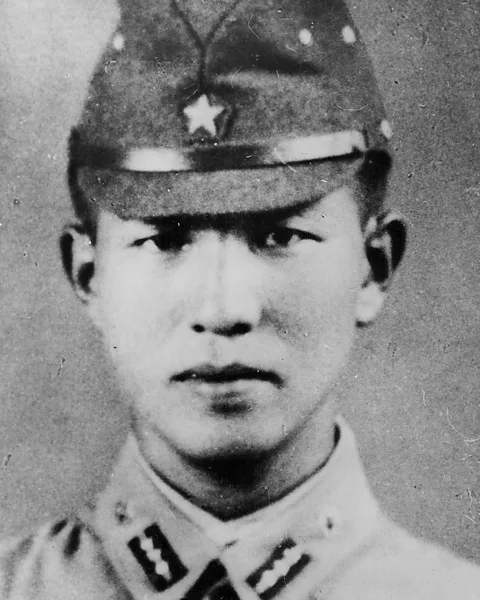
In December 1944, 22-year-old Hiroo Onoda was deployed to Lubang Island with explicit orders from Major Yoshimi Taniguchi:
“Whatever you do, do not surrender. Hold out. We will come back for you.”
Trained in guerrilla warfare at the Nakano School, Onoda was instructed to destroy the airfield and pier, then harass the enemy for as long as possible. When American forces landed in February 1945, Onoda and three comrades — Private Yuichi Akatsu, Corporal Shoichi Shimada, and Private First Class Kinshichi Kozuka — retreated into the mountains.
Japan surrendered on August 15, 1945. But Onoda never heard the news.
Leaflets, loudspeakers, and even letters from family were dismissed as enemy propaganda. For Onoda, the war was a sacred duty — and duty demanded he fight on.
29 Years in the Jungle
- 1945–1950: The group survived on bananas, coconuts, and stolen rice, killing roughly 30 Filipinos they believed were enemy soldiers or collaborators.
- 1950: Akatsu surrendered, but Onoda refused to believe his comrade’s defection.
- 1954: Shimada was killed in a shootout with local search parties.
- 1972: Kozuka was shot dead by Philippine police — news that finally reached Japan, confirming Onoda was still alive.
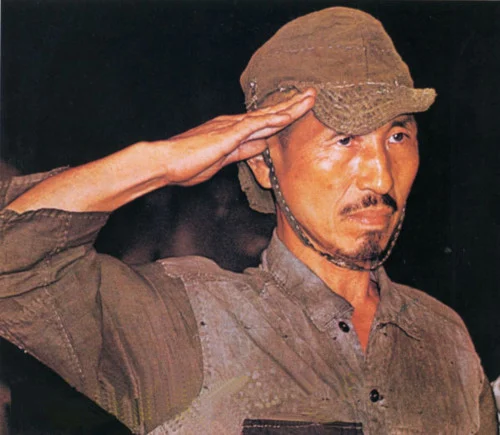
For nearly three decades, Onoda patched his tattered uniform with bark, oiled his Arisaka rifle with boiled coconut oil, and evaded thousands of searchers. He saw planes, heard radios, read newspapers dropped from helicopters — all dismissed as tricks.
The Surrender: March 9, 1974
In February 1974, Japanese explorer Norio Suzuki found Onoda after a four-day search. Onoda refused to surrender without orders. Suzuki returned to Japan and located Major Taniguchi — now a bookseller in Tottori Prefecture.
On March 9, 1974, Taniguchi flew to Lubang in civilian clothes. Standing before Onoda in the jungle, he read the official surrender order:
“Japan has surrendered. All combat activities are to cease immediately. Lieutenant Onoda is relieved of duty.”
Onoda — still in his patched uniform, rifle at his side, sword in hand — saluted, wept, and laid down his weapons. He was 52 years old.

Return and Legacy
Onoda returned to a Japan he barely recognized. Honored as a hero by some, criticized by others for the deaths he caused, he lived quietly in Brazil for a time before returning to Japan, where he opened a nature school for children and wrote his memoir No Surrender: My Thirty-Year War (1974).
He died in 2014 at age 91.
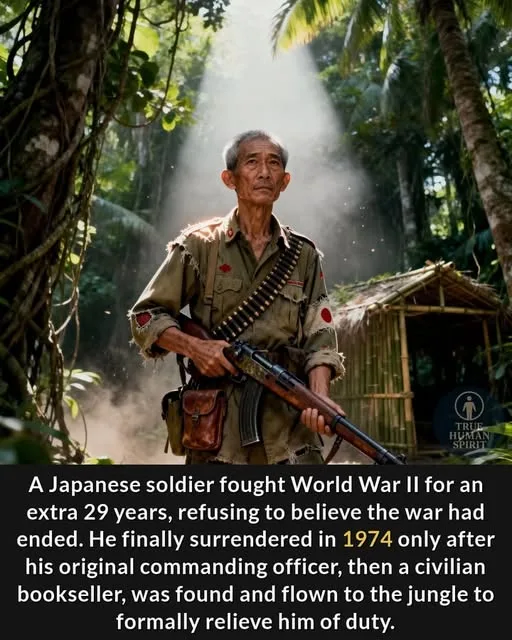
The Man Who Outlasted a War
Hiroo Onoda wasn’t crazy.
He was the embodiment of bushido taken to its absolute extreme — loyalty so complete it transcended time itself.
In an era of shifting allegiances, his story — tragic, heroic, and profoundly human — forces us to ask:
What beliefs are we willing to die for?
And when do those beliefs become our prison?
Onoda held the line for 29 years after the war ended.
He never surrendered his duty.
But in the end, duty surrendered to him.