“SEALED FOR MILLENNIA—NOW OPENED?!” SHOCK CLAIMS ERUPT THAT SCIENTISTS HAVE FINALLY UNLOCKED THE Ark of the Covenant—WHAT THEY FOUND INSIDE COULD CHANGE EVERYTHING!
“‘THEY WERE WARNED NOT TO TOUCH IT!’” EXPLOSIVE RUMORS SWIRL AFTER ALLEGED DISCOVERY OF THE Ark of the Covenant—IS THE TRUTH BEING HIDDEN FROM THE PUBLIC?!
There are discoveries… and then there are discoveries that arrive wrapped in mystery, dipped in legend, and served with a side of pure, unfiltered chaos.
And right on cue, a headline has stormed across the internet with all the subtlety of a thunderclap: “Scientists FINALLY Opened The Ark Of Covenant That Was Sealed For Thousands Of Years?” A question mark, yes—but not the kind that slows anyone down.
If anything, it acts like fuel, turning curiosity into instant belief, hesitation into excitement, and a single claim into a global spectacle.
Because we’re not talking about just any object.
We’re talking about the legendary Ark of the Covenant.
The sacred chest described in ancient texts.
The one associated with divine power, mystery, and a long list of stories that sound less like history and more like something straight out of a blockbuster film.
The artifact that has inspired theologians, historians, explorers, and yes—Hollywood—for generations.
So when someone says it’s been “opened”?
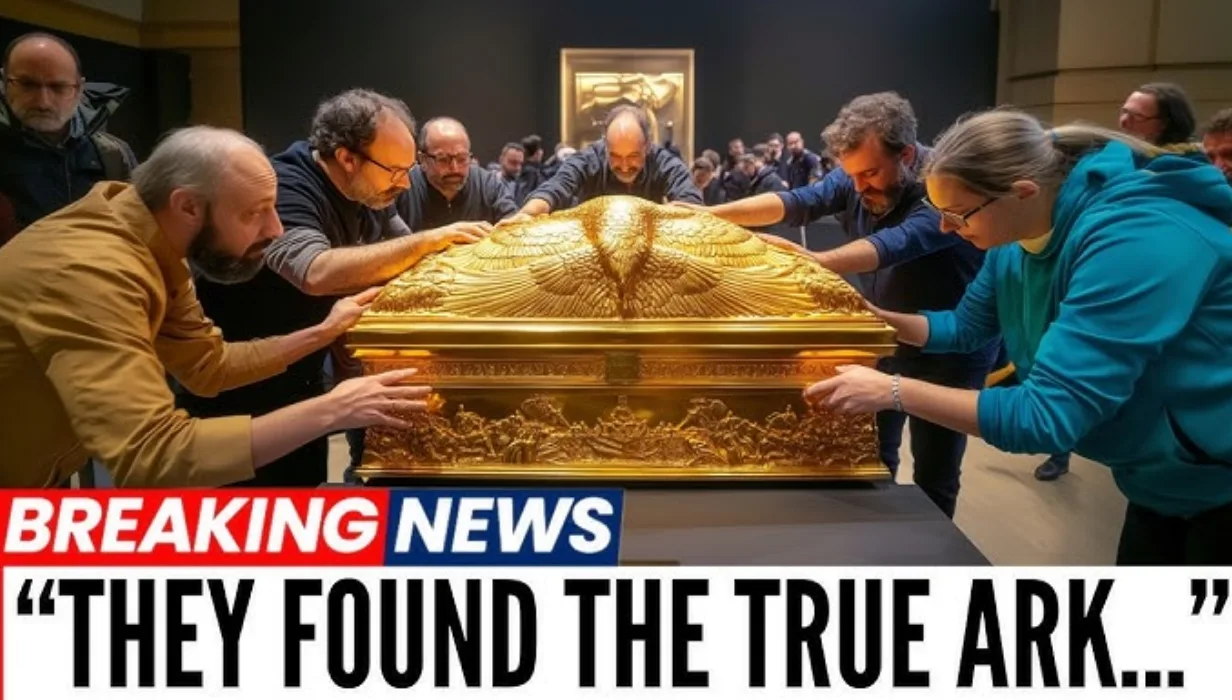
You don’t just get attention.
You get a full-scale digital explosion.
“THIS CAN’T BE REAL,” one user types, immediately followed by another who replies, “IT HAS TO BE.
” Because in the internet’s world, doubt and certainty are not opposites—they are partners, working together to push a story further and faster than either could alone.
Within minutes, the claim spreads.
Not carefully.
Not cautiously.
But rapidly, aggressively, as if it has somewhere important to be.
Shared across platforms, translated into different languages, repackaged into increasingly dramatic versions of itself.
Because that’s what viral stories do.
They evolve.
They grow.
They become bigger than their original form.
And very quickly, this stops being a question.
It becomes a narrative.
Because once people see “Ark of the Covenant” and “opened” in the same sentence, something clicks.
Something ancient.
Something symbolic.
Something that makes them feel like they might be witnessing a moment that connects past, present, and something far beyond both.
“This is history,” one comment declares.
“This changes everything,” another insists.
“We weren’t supposed to know this,” a third adds, because no global mystery is complete without at least one person suggesting secrecy.
And just like that, the story takes on a life of its own.
Now, let’s pause—briefly—and look at reality.
Because while the Ark of the Covenant is indeed one of the most famous artifacts ever described, its actual location has never been definitively confirmed.
Not by archaeologists.
Not by historians.
Not by any widely accepted, verifiable source.
There are theories.
There are traditions.
There are claims.
But there is no universally agreed-upon discovery that says, “Here it is.
We found it.
Case closed.
”
Which makes the idea that scientists have suddenly “opened” it… complicated.
Because before you can open something, you have to know exactly where it is.
And that’s where the story begins to wobble.
Because while the headline suggests a dramatic breakthrough, the supporting evidence remains—let’s say—less dramatic.
No major scientific institution has announced such a discovery.
No widely recognized archaeological body has confirmed it.
No clear documentation, no verified footage, no consistent reporting across reliable sources.
But here’s the twist.
By the time that information becomes clear…
It almost doesn’t matter.
Because the reaction has already happened.
And the reaction is everything.
“This was predicted,” someone writes, confidently linking the claim to a broader narrative that may or may not exist.
“There will be consequences,” another warns, because nothing says “ancient artifact” like the possibility of dramatic, unspecified outcomes.
“They shouldn’t have opened it,” a third declares, even though no one has confirmed that it was opened in the first place.
And just like that, we’ve entered a familiar territory.
The space where speculation outruns verification.
Where imagination fills in the gaps.
Where a single sentence becomes a thousand different stories, each one slightly more dramatic than the last.
Meanwhile, somewhere far from the chaos, actual experts are doing something radical.
They are not panicking.
They are not declaring the end of anything.
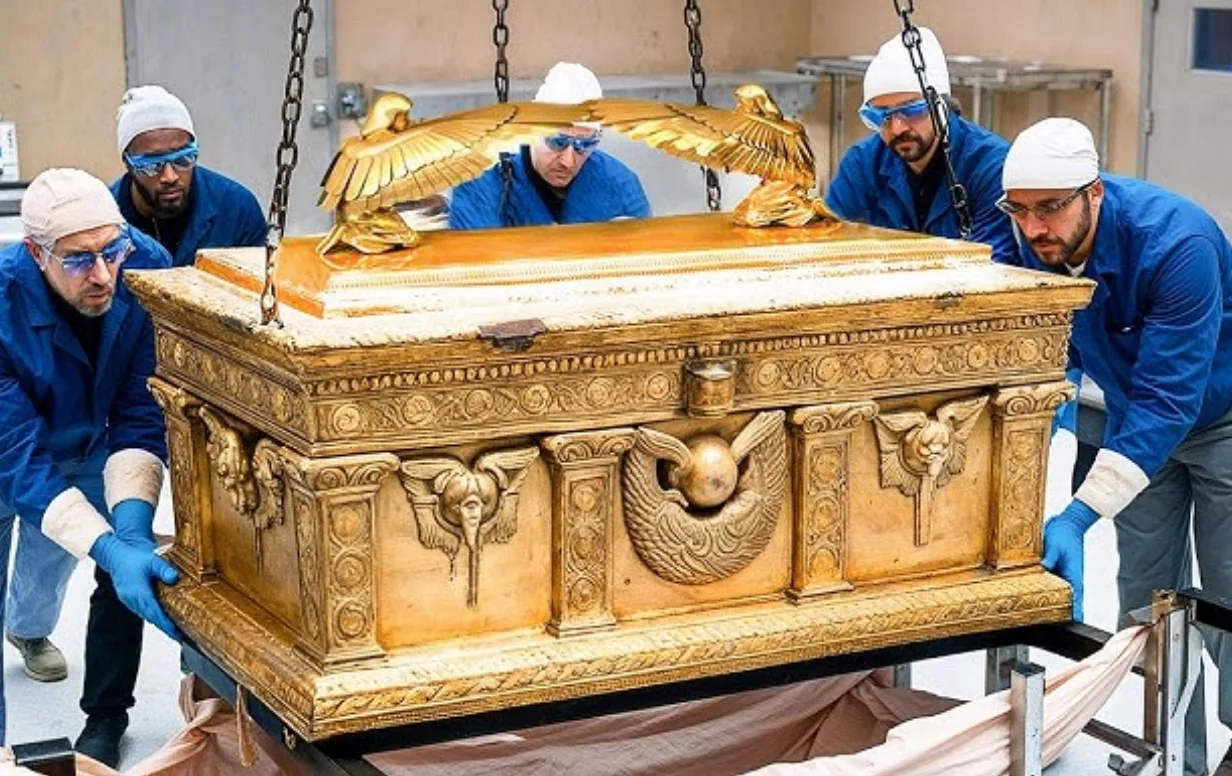
They are asking questions.
Simple ones.
“Which site?”
“Which team?”
“What evidence?”
Questions that don’t trend nearly as well as “ARK OPENED AFTER THOUSANDS OF YEARS!!!” but are, unfortunately, much more useful.
Because here’s the reality.
Archaeology does not work like a movie.
You don’t just stumble upon the most legendary artifact in history, open it, and casually announce it to the world via a vague headline.
There are processes.
Documentation.
Verification.
Peer review.
All the slow, careful steps that ensure a discovery is real before it becomes global news.
And yet, none of those steps seem to have accompanied this claim.
Which raises an uncomfortable possibility.
That the story might not be what it appears to be.
But again—“might not be real” is not nearly as exciting as “ancient artifact opened.
”
So the story continues.
Because once a narrative like this gains momentum, it doesn’t just disappear.
It evolves.
It adapts.
It finds new angles.
New interpretations.
New reasons to stay alive in the conversation.
“Maybe they’re hiding it,” someone suggests.
“Maybe it’s classified,” another adds.
“Maybe this is just the beginning,” a third concludes, leaving the door open for infinite possibilities.
And that’s the key.
Possibility.
Because the idea of the Ark of the Covenant being found and opened is powerful, not because it’s confirmed, but because it’s possible—at least in the imagination.
It taps into something deeper.
A fascination with the unknown.
A curiosity about history.
A desire to believe that there are still secrets waiting to be uncovered.
And when a headline suggests that one of the biggest secrets of all has just been revealed?
People don’t wait.
They react.
They share.
They engage.
Because even if it’s not true, it feels important.
And feeling, as we’ve learned, often comes before fact.
Of course, eventually, reality tends to catch up.
More questions emerge.
More scrutiny appears.
And the story either stabilizes into something verifiable…
Or fades into the long list of viral claims that captured attention before quietly losing it.
But even if that happens, the impact remains.
Because for a brief moment, millions of people around the world paused and thought:
“What if?”
What if the Ark of the Covenant had been found?
What if it had been opened?
What if something extraordinary had just happened?
And that moment—that spark of curiosity—is what keeps stories like this alive.
Even when the evidence doesn’t quite keep up.
So was the Ark really opened?
As of now, there is no clear, widely verified proof that it has been discovered, let alone opened by scientists.
But the idea?
That’s wide open.
And as long as that idea continues to circulate, to inspire, to provoke, this story will keep moving.
Because in the end, the internet doesn’t need certainty to create a sensation.
It just needs a headline that sounds like one.
And this one?
It sounded like history itself had finally unlocked its most mysterious secret—even if, in reality, the lock might still be exactly where it’s always been.