“HAS IT STARTED?”
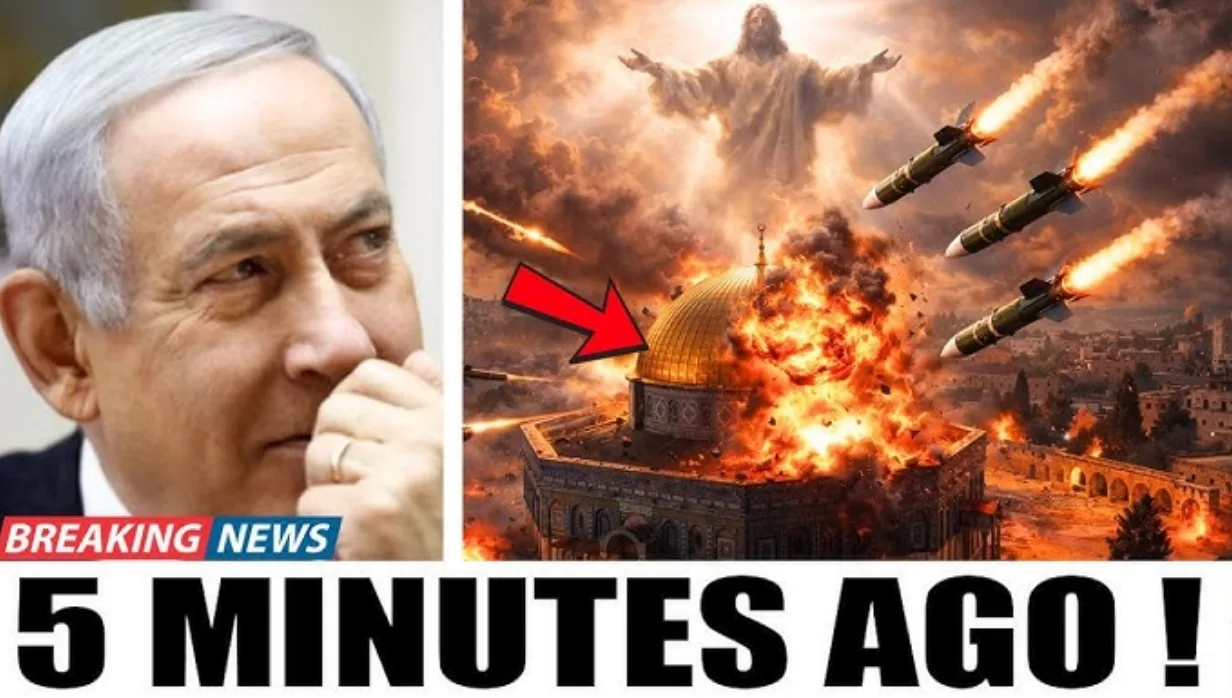
Disturbing reports emerging from Jerusalem are triggering waves of global anxiety as speculation grows that ancient predictions may finally be unfolding in real time. Long-circulated warnings attributed to Jesus Christ are suddenly resurfacing across the internet, leaving scholars divided and audiences worldwide asking the same unsettling question:
Why do these events appear to echo centuries-old prophecies so closely?
Fear and fascination are spreading rapidly as unexpected developments in Jerusalem ignite claims that humanity may be standing at a prophetic crossroads. Is this the long-anticipated turning point spoken about for generations?
Or is it something far more ordinary—misunderstood, misinterpreted, and amplified by people who benefit from the confusion?
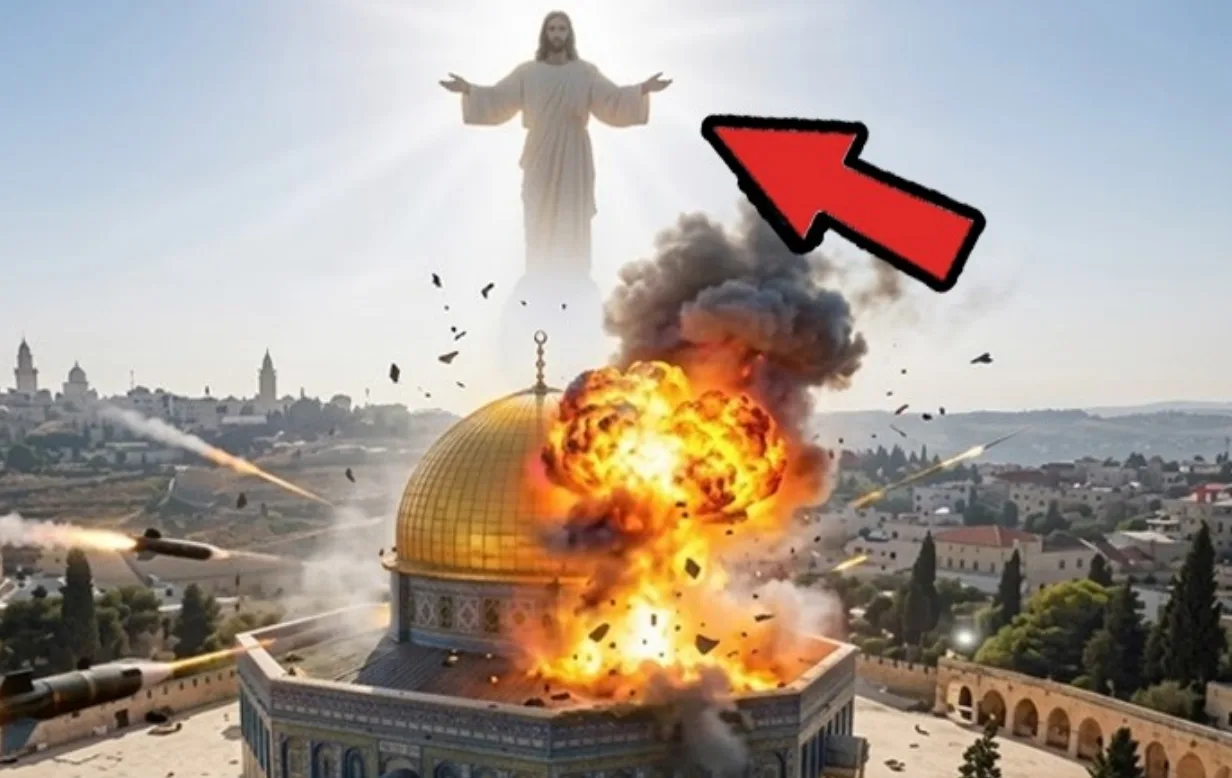
Either way, subtlety didn’t stand a chance.
“IT STARTED IN JERUSALEM!!” the caption shouted—paired with enough flashing symbols and emojis to suggest either the beginning of the end or someone typing while dramatically pacing their living room.
Within minutes, the video attached to that headline—grainy, urgent, and suspiciously cinematic—spread across platforms at lightning speed, pulling millions into the internet’s most addictive recurring storyline:
prophecy panic, live from Jerusalem.
And just like that, the narrative took off.
Because when the words Jerusalem and ancient prophecy appear in the same sentence, attention doesn’t just rise.
It explodes.
Theories multiply.
Comment sections transform overnight into impromptu theology seminars led by people who discovered scripture approximately eight minutes earlier.
And naturally, the name Jesus Christ enters the conversation like a dramatic closing argument, because nothing signals seriousness online quite like invoking ancient warnings over footage edited on a smartphone with blockbuster trailer music.
The video itself?
A patchwork of real street scenes—crowds moving, tension in the air, ordinary moments inside a complicated city—layered beneath soundtrack choices that sounded like they belonged in a disaster movie preview.
A voice begins quietly.
Then firmly.
Then with unmistakable certainty:
“This is the moment.
The prophecy has begun.”
Which prophecy?
That depended entirely on which corner of the internet you wandered into—because within a single day, more than a dozen competing interpretations surfaced, each delivered with total confidence and supported primarily by… atmosphere.
And the reactions came fast.
“This is exactly what was predicted,” one commenter insisted with the conviction usually reserved for debates about pineapple on pizza.
“We’ve entered the final phase,” another declared, as though reality had quietly transitioned into its last chapter without notifying anyone.
A third raised the stakes even higher:
“History is unfolding right in front of us.”
Technically true, of course.
History always is.
But rarely does it feel this theatrical.
Because drama changes everything.
Without it, this is simply another development in one of the world’s most historically layered cities.
With it, it becomes a global storyline.
A mystery.
Possibly even a turning point for civilization—depending on how dramatically you interpret a 45-second clip.
Then came the experts.
Or rather, the internet’s version of them.
The ones who appear on camera speaking slowly and seriously while somehow avoiding saying anything specific at all.
One self-described “prophecy analyst” explained:
“What we’re witnessing fits multiple eschatological structures discussed across centuries.”
An impressive sentence that roughly translates to:
“People have been talking about things like this for a very long time.”
Another figure introduced as a “historical pattern observer” leaned closer to the camera and added:
“Jerusalem events often trigger wider global shifts.”
Which sounds profound until you realize it could describe nearly any major moment in the region at almost any point in recorded history.
Meanwhile, actual historians and theologians—people who have spent years studying context, symbolism, and interpretation—are patiently reminding audiences that prophecy is rarely literal.
That meanings shift.
That conclusions require caution.
But calm explanations rarely compete well with dramatic music and flashing captions.
Guess which version spreads faster.
Because the real fuel behind this entire situation isn’t proof.
It isn’t agreement.
It isn’t clarity.
It’s attention.
The suggestion that something enormous has just begun is irresistible.
It activates curiosity.
Fear.
Excitement.
And that deep human instinct to search for patterns whenever events feel unusually significant.
Suddenly you’re not scrolling anymore.
You’re witnessing destiny unfold.
Or at least, that’s the feeling.
And online, feeling is everything.
Of course, not everyone is convinced.
Skeptics arrived quickly—armed with sarcasm and a powerful sense of déjà vu.
“This happens every year,” one wrote.
“New video. Same prophecy claims.”
Another added:
“If every headline like this were true, the world would’ve ended about twelve times already.”
Dry humor aside, their presence matters.
Because they highlight something important:
This cycle isn’t new.
Something happens.
A clip spreads.
A dramatic narrative forms.
Reactions explode.
Then eventually—
attention moves on.
The prophecy fades.
The urgency dissolves.
And the world continues exactly where it left off.
But right now?
The cycle is accelerating again.
Fresh clips are appearing hourly.
Different angles.
Slower edits.
Zoomed frames claiming hidden signs in the background.
Someone links the moment to unrelated global developments.
Someone else constructs a timeline convincing enough to feel meaningful—until you realize it’s built mostly from assumptions and enthusiasm.
And suddenly this isn’t just one claim anymore.
It’s an ecosystem.
A web of speculation feeding itself with every share, every comment, every reaction.
At that point, what started the story almost stops mattering.
The story becomes the event.
Some observers believe this says more about us than it does about Jerusalem.
That it reflects our search for structure in uncertain times.
Our desire for meaning inside complexity.
Even if that meaning arrives wrapped in dramatic, slightly terrifying prophecy narratives.
Others see something different.
They see a perfect example of how quickly stories can be amplified online.
How repetition can transform speculation into certainty.
How easily a headline can overshadow nuance.
And then there are the creators behind the videos themselves.
Selecting footage.
Adding music.
Writing captions powerful enough to turn a moment into a movement.
Are they convinced?
Are they strategic?
Possibly both.
What’s certain is this:
they understand attention.
And right now, nothing captures attention faster than the possibility that history has just shifted direction.
As for what actually happened in Jerusalem?
The truth is far less dramatic than the headlines suggest.
A real situation.
A meaningful moment.
But not necessarily a prophetic milestone.
Not necessarily an apocalyptic signal.
More likely one development inside an ongoing and complicated reality—not a single defining turning point for humanity.
But that version doesn’t trend.
“IT’S STARTED!” trends.
“PROPHECY FULFILLED!” trends.
“JESUS WARNED ABOUT THIS?” trends.
So the narrative keeps growing.
More reactions.
More interpretations.
More layers stacked onto a story already drifting far from its origin.
A story that will probably intensify…
then fade…
then return again in another form the next time something unexpected happens in a city the world watches closely.
Because this is how modern storytelling works now.
We don’t just experience events.
We experience versions of events.
Filtered.
Amplified.
Reframed.
And somewhere inside that process, the boundary between what is happening…
and what feels like it’s happening…
becomes harder to see.
So has the “great prophecy” really begun in Jerusalem?
Or are we witnessing, once again, the transformation of a complicated reality into a powerful narrative designed to keep us watching, reacting, and wondering what comes next?
The answer depends entirely on who you ask.
But one thing is undeniable.
Whatever has started—
it isn’t only unfolding in Jerusalem.
It’s unfolding on our screens.