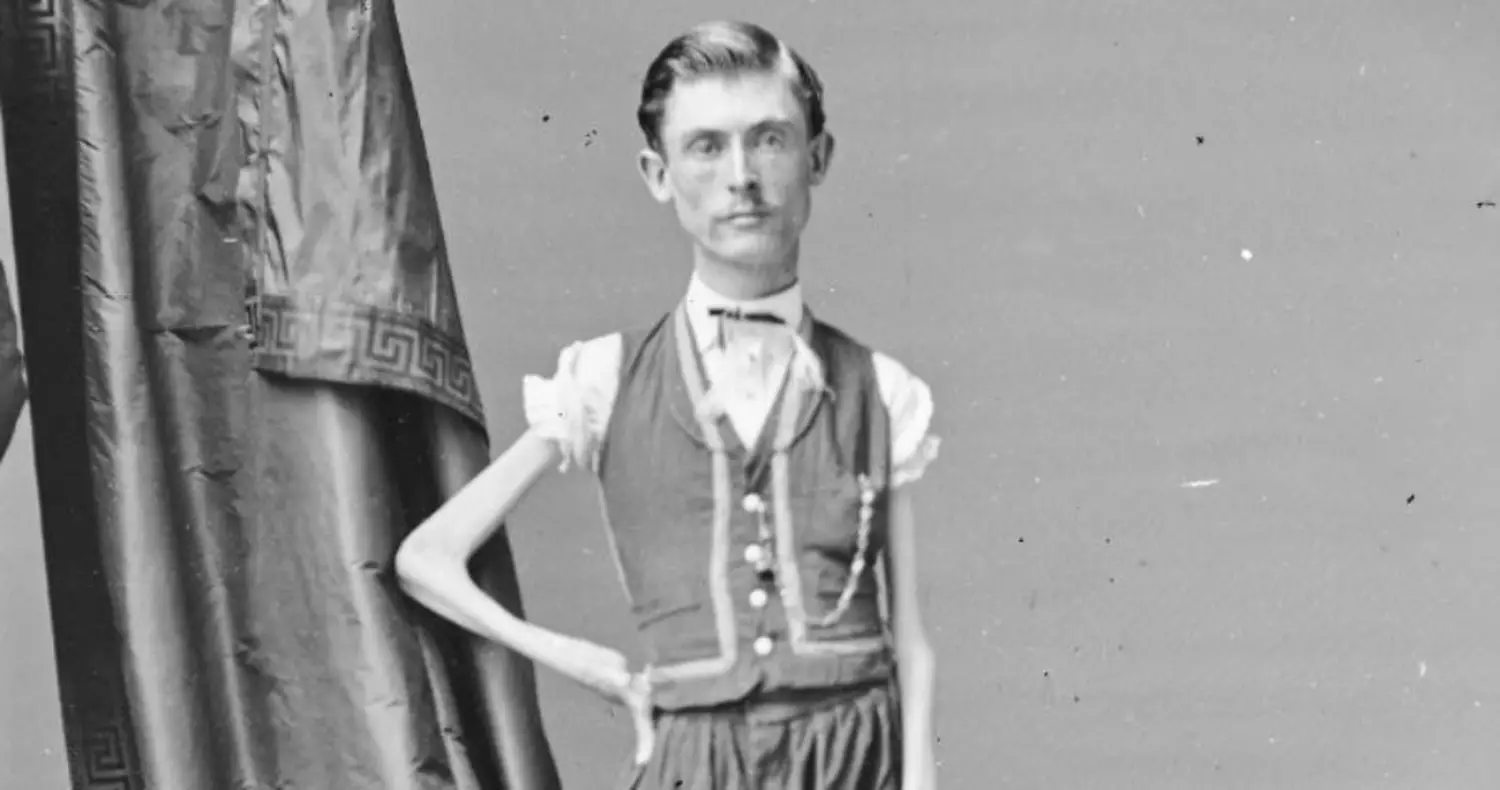
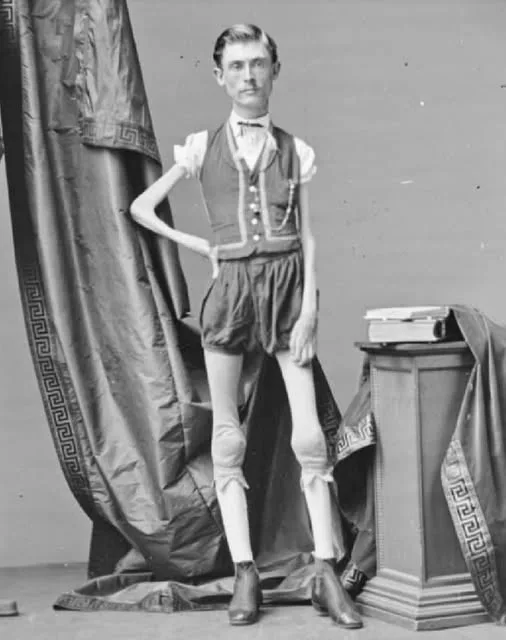
Isaac W. Sprague was born on June 21, 1841, in Scituate, Massachusetts, a healthy boy who grew normally until age 12. Then, without warning or explanation, he began to lose weight at an alarming rate. Despite eating voraciously and showing no other symptoms, his body wasted away. By adulthood he stood 5 feet 6 inches (1.68 m) tall but weighed only 43 pounds (19.5 kg) — one of the most extreme cases of emaciation ever recorded.
Doctors of the era were baffled. Sprague was mentally sharp, socially capable, and otherwise healthy — no tuberculosis, no cancer, no known metabolic disorder. Modern speculation points to possible severe hyperthyroidism, malabsorption syndrome, or an undiagnosed genetic condition, but his case remains a medical mystery.
From Grocer’s Apprentice to Sideshow Star
Unable to perform physical labor, Sprague briefly worked as a grocer’s clerk until customers recoiled at his appearance. In 1865, at age 24, he joined P.T. Barnum’s American Museum in New York City, billed as “The Living Skeleton.” The following year he toured with Barnum’s traveling circus alongside other human curiosities.
He carried a doctor’s note in his pocket explaining his condition, lest anyone try to force-feed or hospitalize him. On stage he demonstrated his strength — lifting heavy weights to prove his frailty was not weakness — and allowed audiences to touch his protruding bones. For a time, he earned a decent living and supported his family.
A Brief Marriage and Family Life
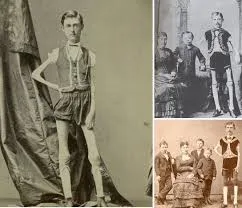
In 1870, at age 29, Sprague married Tamora Anne Tower. The couple had three healthy sons:
Isaac Jr. (1871)
George (1873)
Frank (1875)
Despite his condition, Sprague lived a relatively normal domestic life when not touring.
Decline and Death
As public interest in “human curiosities” waned in the 1880s, work dried up. Without savings, Sprague fell into poverty. He died alone in Chicago on January 6, 1887, at age 45, likely of complications from malnutrition or organ failure. His death certificate simply listed “marasmus” — progressive emaciation.
Legacy
Isaac Sprague’s life is a haunting reminder of how physical difference was once commodified for spectacle. He was not a willing celebrity; he was a man who turned society’s morbid curiosity into the only livelihood available to him.
His story lives on in medical literature, circus history, and the broader conversation about dignity, exploitation, and the human cost of being “different” in a world that often looks away.
“I am not a sick man. I am a curiosity.”
— Isaac W. Sprague (attrib.)