Healed by Fish Skin: The Tilapia Revolution in Burn Treatment
In the hospitals of northeast Brazil, a quiet revolution is happening—one that began with a fish once considered little more than food waste. Tilapia skin, rich in collagen and natural proteins, is now saving lives and transforming the treatment of severe burns. When applied to a patient’s wounds, it doesn’t just cover the damage—it heals. Pain fades almost instantly. Infection is blocked. Recovery accelerates. Scars are lighter. And for the first time in modern medicine, a natural, sustainable biomaterial is outperforming traditional dressings. From trash to treatment, the tilapia has become a global symbol of what happens when compassion, creativity, and science swim in the same direction.
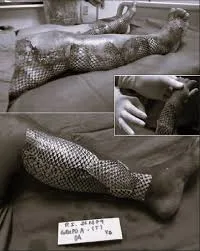
The Discovery: From Market Waste to Medical Breakthrough
The story begins in Fortaleza, Ceará, one of Brazil’s poorest regions, where burn care was a crisis. Traditional treatments—silver sulfadiazine cream and human cadaver skin—were expensive, scarce, and painful to change daily. In 2014, Dr. Edmar Maciel, a plastic surgeon and burn specialist, noticed fishermen discarding tilapia skins. Rich in type I collagen (the same kind found in human skin) and naturally moist, the skins had been used in folk medicine for centuries.
Teaming up with researchers at the Federal University of Ceará, Maciel developed a process:
- Skins are cleaned, chemically treated, and sterilized.
- Glycerol is added to preserve flexibility.
- The final product is stored at 4 °C—no refrigeration needed in remote clinics.
In 2015, the first human trial began. The results were staggering.
How It Works: Nature’s Perfect Bandage
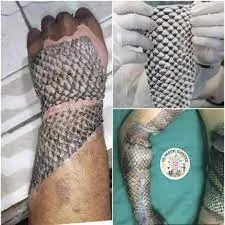
When tilapia skin is laid over a burn:
- Pain relief is immediate — the cool, moist skin blocks nerve endings.
- Infection risk drops — its tight structure acts as a natural barrier.
- Collagen integrates — stimulating new tissue growth and angiogenesis.
- No daily changes — the skin adheres for 7–14 days, then peels off painlessly.
A 2018 study in Journal of Tissue Viability showed:
- Second-degree burns healed 3–7 days faster.
- Third-degree burns required 40 % fewer skin grafts.
- Pain scores dropped from 8/10 to 2/10 within hours.
By 2023, over 1,000 patients had been treated across Brazil, with the method now used in Venezuela, Colombia, and trials in the U.S. and Europe.
Real Stories, Real Miracles
- Maria de Jesus, a 23-year-old mother burned over 40 % of her body in a cooking accident, avoided amputation thanks to tilapia skin.
- José, a construction worker with third-degree burns, walked out of hospital in 21 days instead of the usual 60.
- Children with facial burns healed with minimal scarring, sparing them a lifetime of stigma.
The treatment costs $3–$5 per application — compared to $200+ for human cadaver skin.
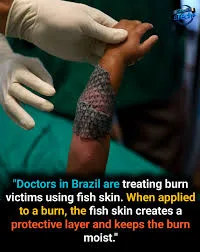
Global Impact and Future Potential
- Brazil’s Ministry of Health approved tilapia skin in 2021.
- WHO is studying it for low-resource settings.
- Veterinary use has begun — treating burned dogs and cats.
Researchers are now exploring stingray, shark, and salmon skins for different wound types.
A Lesson from the Deep
Like the Moors’ medical texts, the Dahomey Amazons’ cornrows, or the ingenuity of the Frydenbø generator, tilapia skin shows that solutions often hide in plain sight. From market waste to miracle, it proves:
- Sustainability saves lives.
- Compassion drives science.
- The humblest materials can heal the greatest wounds.
The next time you see a tilapia on a plate, remember:
Its skin once fed a family.
Now it heals one.