Tom Hanks and the Price of Truth: The Physical Toll Behind Cast Away
Tom Hanks didn’t just play Chuck Noland in Cast Away (2000). He lived him.
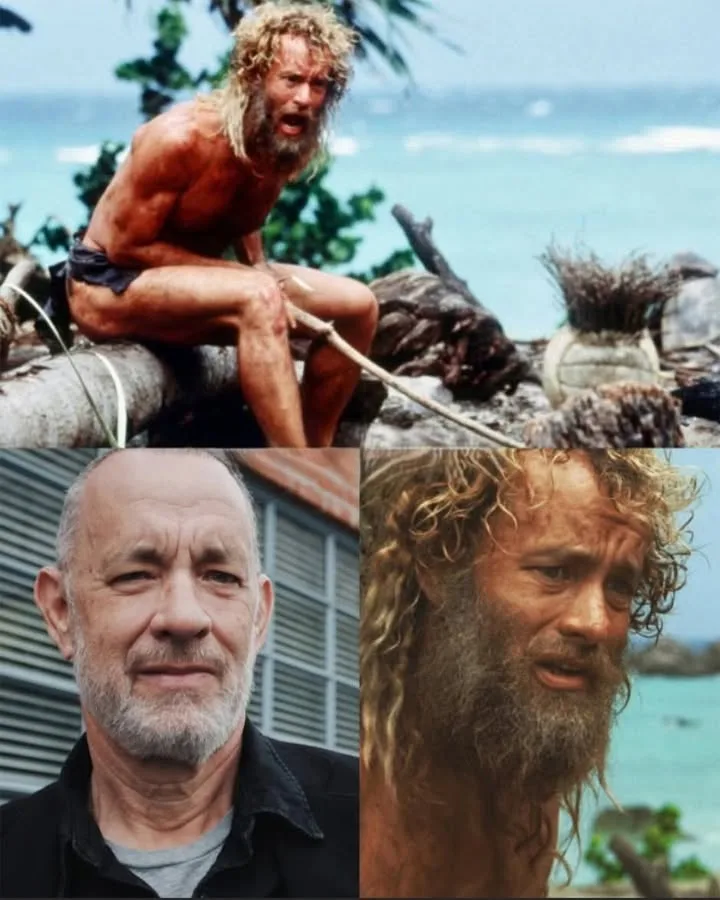
To become a man stranded alone for four years, Hanks lost 55 pounds (25 kg) — dropping from 225 to 170 — grew a real beard, let his hair tangle into salt-crusted dreads, and spent months on the remote Fijian island of Monuriki in blistering heat with minimal food. This wasn’t method acting for show. It was total immersion.
Then, disaster struck.
A small coral cut on his leg — barely noticeable at first — became infected with staphylococcus. Within days, his leg ballooned. The pain was excruciating. Doctors later warned that if he had waited even one more day, the infection could have turned septic and become life-threatening. Production shut down for three months while Hanks was airlifted to Los Angeles for emergency treatment.
He didn’t quit.
As soon as he recovered, he returned to that island and finished the film.
“If we’re going to tell a story about survival,” he told the crew, “we’d better survive it.”
And we felt it.
When he screamed “WILSON!” — that raw, soul-shattering cry over a volleyball — it wasn’t acting. It was a man who had lived in isolation for months, who knew what loneliness actually tastes like.
This Wasn’t the First Time
- Philadelphia (1993): Lost 26 pounds to play a man dying of AIDS. Collapsed between takes from exhaustion.
- Saving Private Ryan (1998): Demanded real mud, real cold, real exhaustion. Told Spielberg: “We can’t fake truth.” Spielberg agreed: “Then we won’t.”
Hanks doesn’t want to act like he cares.
He wants to care.
He believes the audience can smell inauthenticity from a mile away — and he refuses to give it to them.
The Cost of Authenticity
- Cast Away nearly killed him.
- The physical toll aged him visibly.
- He has spoken openly about how the role left emotional scars — the silence, the isolation, the weight of being truly alone.
Yet every time he’s asked if it was worth it, his answer is the same:
“Yes. Because that’s the job.”
The Legacy
That commitment is why we trust Tom Hanks.
Not because he’s America’s nice guy.
But because when he cries, we believe the tears are real.
When he fights, we believe he’s bled.
When he survives, we believe he earned it.
He doesn’t just play heroes.
He becomes them — at a cost most would never pay.
And that’s why, twenty-five years later, we still hear him scream:
“WILSON!”
… and feel our own hearts break.
Because Tom Hanks didn’t just survive the role.
He survived himself — and brought the truth back with him.