El Salvador’s Mega-Prisons: The Country That Caged Its Monsters
As of December 02, 2025, the images coming out of El Salvador remain seared into global memory: thousands of men with shaved heads, tattooed torsos, and bound hands, kneeling in endless rows under floodlights. This is the Centro de Confinamiento del Terrorismo (CECOT) — the world’s largest mega-prison — and the centerpiece of President Nayib Bukele’s war on gangs. Built in record time and opened in 2023, CECOT holds over 40,000 inmates, many from the notorious MS-13 and Barrio 18 gangs that once turned El Salvador into the murder capital of the world. To supporters, it is the ultimate symbol of order restored. To critics, it is a dystopian fortress where human rights have been traded for security. This is the story of a nation that decided to cage its monsters — and became one in the process.
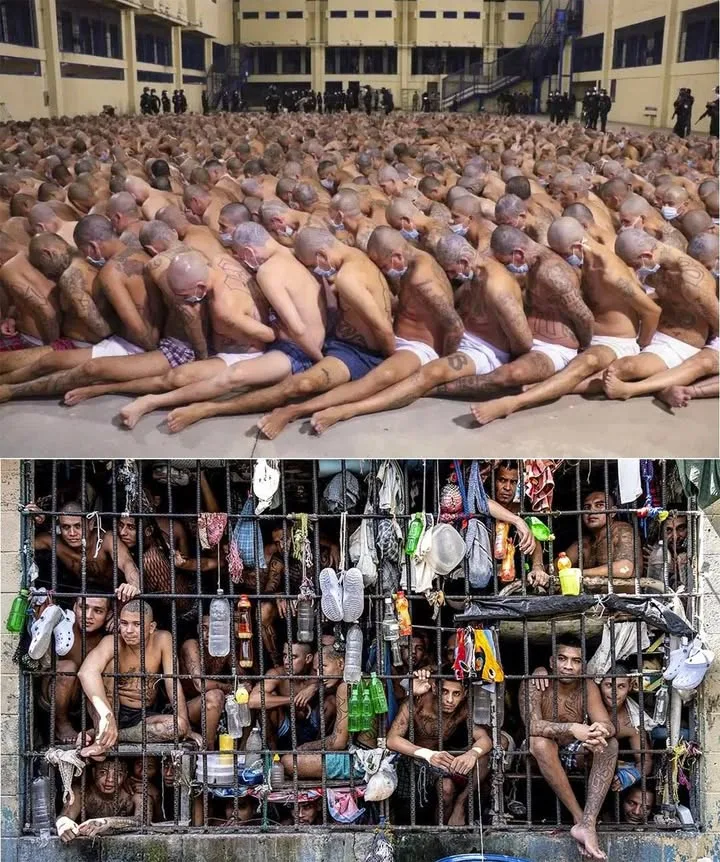
From Murder Capital to “Safest Country in Latin America”
In 2015, El Salvador recorded 6,656 homicides — a rate of 103 per 100,000 people, the highest in the world. MS-13 and Barrio 18 controlled entire neighborhoods, extorting businesses, recruiting children, and leaving bodies in the streets. Families paid “renta” or fled. By 2022, after Bukele’s state of emergency and mass arrests, the homicide rate plummeted to 2.4 per 100,000 — lower than the United States.
Bukele’s formula:
- March 2022: State of emergency after a weekend of 87 gang killings.
- Over 80,000 arrests (1 in 100 Salvadorans) without warrants.
- CECOT: A 236-hectare complex in Tecoluca, designed for 40,000, with 336 cells of 100 men each — no visitation, no sunlight, no rehabilitation.
Inside CECOT: Life in the Cage
- No windows, no natural light — only fluorescent bulbs.
- Inmates sleep on metal bunks, four tiers high, no mattresses.
- 18-hour lockdowns, two 30-minute exercise periods under armed guard.
- Food: rice, beans, and tortillas delivered through slots.
- No education, no work programs, no religious services — only punishment.
Guards in black balaclavas and riot gear patrol with rifles. Drones and 360-degree cameras watch every movement. Bukele calls it “hell on Earth” — deliberately.
The Human Cost
Human Rights Watch, Amnesty International, and Cristosal document:
- Over 300 deaths in custody since 2022 (torture, disease, neglect).
- Mass arrests without evidence — barbers, bus drivers, even children.
- No due process — many held for years without trial.
In 2025, the Supreme Court — packed with Bukele allies — extended the state of emergency for the 31st time.
Global Reaction: Hero or Dictator?
- Supporters (70–90% approval in El Salvador): “He gave us peace.”
- Critics: “He traded democracy for security.”
U.S. policy wavers — praising results while condemning abuses. Bitcoin-city dreams and TikTok diplomacy mask a darker reality.
Lessons for Today
El Salvador’s experiment raises urgent questions:
- Can security justify mass incarceration without trial?
- Does the end (peace) justify the means (human rights erosion)?
- When does a war on crime become a war on people?
Like the Moors’ legacy or the 1918 flu’s silent toll, it shows how fear can reshape a nation — for better and worse.
A Nation Transformed — At What Price?
El Salvador caged its monsters.
The streets are quiet.
The prisons are full.
And the world watches — some in awe, others in horror — as one man’s iron fist redefines what “safety” can cost.